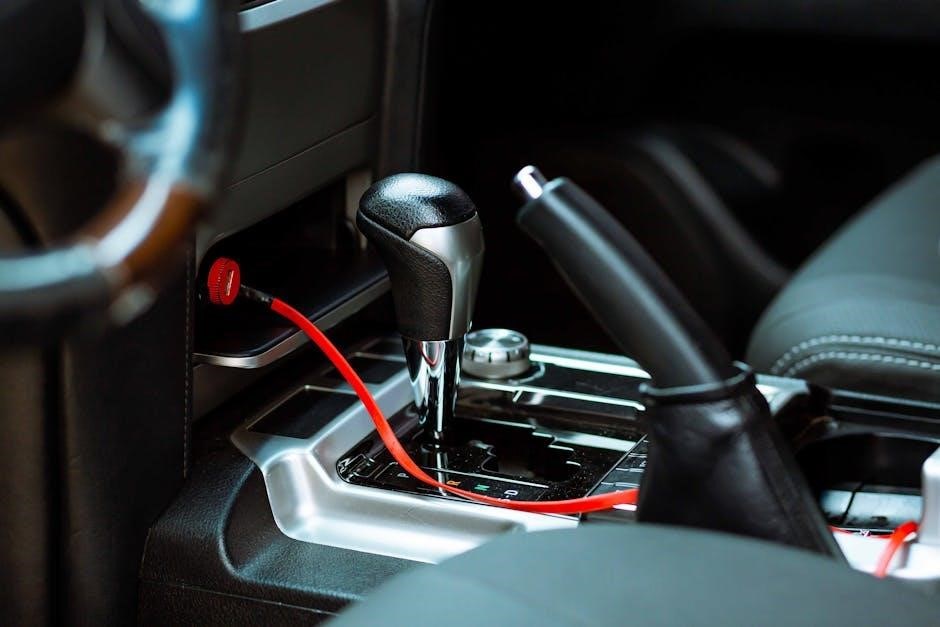
The core difference lies in driver control: manual requires gear shifting, while automatic handles it for you. Russian market trends show automatics gaining popularity, shifting from 20% in 2005 to a significant rise by 2025;
Historical Overview of Transmission Types
Early automobiles predominantly featured manual transmissions, demanding significant driver skill for gear selection and clutch operation. The advent of automatic transmissions in the 1930s, utilizing hydraulic torque converters, offered a simpler driving experience. Post-World War II, automatics gained traction, particularly in North America.
However, manual transmissions retained popularity in Europe and other regions, valued for fuel efficiency and driver engagement. Recent innovations include Automated Manual Transmissions (AMT) and Intelligent Manual Transmissions (iMT), bridging the gap between the two. The Russian market reflects this evolution, with automatics steadily increasing their market share since 2005.
Current Market Trends (2025-2026) ⎼ Russia
In Russia, the automotive landscape is witnessing a clear shift towards automatic transmissions. Data indicates that in 2005, automatics comprised roughly 20% of new car sales. By 2025, this figure has substantially increased, demonstrating growing consumer preference for convenience and ease of use.
This trend is fueled by increasing urbanization and traffic congestion, where automatics offer a more comfortable driving experience. While manual transmissions still hold a segment of the market, their overall share is declining as automatics become more affordable and efficient.
How Automatic Transmissions Work
Automatics utilize a hydraulic torque converter and sophisticated shifting logic to seamlessly change gears, eliminating the need for driver intervention, unlike manual systems.
The Role of the Hydraulic Torque Converter
The hydraulic torque converter is central to automatic transmission function, acting as a fluid coupling between the engine and the transmission. Unlike a direct mechanical connection in manuals, it uses fluid dynamics to transmit power. This prevents stalling and allows the engine to continue running even when the wheels are stopped. It multiplies torque when needed, enhancing acceleration, and provides a smoother driving experience; Modern automatics leverage this technology to improve efficiency, preventing wheel slip by modulating fluid flow, a feature absent in traditional manual setups.
Gear Ratios and Automatic Shifting Logic
Automatic transmissions utilize a complex system to select optimal gear ratios based on vehicle speed, engine load, and driver input. Sophisticated algorithms determine shift points, aiming for efficiency or performance. Manual transmissions rely entirely on the driver to choose the correct gear. While automatics offer convenience, modern advancements are narrowing the performance gap. The automatic’s shifting logic adapts, providing seamless transitions, unlike the driver-controlled, sometimes abrupt, shifts of a manual gearbox.
Types of Automatic Transmissions: AMT & iMT
Beyond traditional automatics, Automated Manual Transmissions (AMT) use actuators to shift gears, mimicking a manual but without the clutch pedal. Intelligent Manual Transmissions (iMT) offer clutchless shifting, retaining driver gear selection. These represent a bridge between full automation and manual control. While conventional automatics employ a torque converter, AMT and iMT prioritize efficiency. Modern cars increasingly feature these variations, offering a blend of convenience and driver engagement, challenging the traditional auto versus manual debate.

How Manual Transmissions Work
Manual transmissions rely on a driver-operated clutch and direct gear selection via a shift lever, demanding skill and control over the input shaft functionality.
The Clutch System Explained
The clutch system is fundamental to manual transmission operation, acting as a crucial link between the engine and the gearbox. It temporarily disconnects the engine’s power from the wheels, allowing for smooth gear changes. When the clutch pedal is depressed, it disengages the engine, preventing it from driving the transmission. Releasing the pedal gradually re-engages the power, transferring it to the wheels.
This controlled engagement is what requires driver skill, preventing stalling or jerky movements. Unlike automatic transmissions, which use a torque converter for this function, manual systems rely entirely on this mechanical interaction.
Gear Selection and Driver Control
In a manual transmission, the driver has complete control over gear selection, choosing the optimal ratio for speed and engine load. This is achieved via a gear stick and clutch pedal coordination. Selecting the correct gear maximizes efficiency and performance, demanding attentiveness to engine RPM and road conditions.
This contrasts sharply with automatics, where the vehicle’s computer determines gear changes. Manual driving offers a more engaging experience, requiring skill and providing a direct connection to the vehicle’s mechanics, unlike the simplicity of automatic operation.
Input Shaft Functionality
The input shaft in a manual transmission directly receives power from the engine’s flywheel, transferring rotational force when the clutch is engaged. Its speed is directly proportional to the engine’s RPM, dictating the available power band. This direct connection is fundamental to the driver’s control over power delivery.
Conversely, automatic transmissions utilize a torque converter, creating a fluid coupling. This alters how power reaches the gearbox, smoothing delivery but introducing some efficiency loss. The input shaft’s role is thus fundamentally different, mediating rather than directly transmitting engine power.
Key Differences: Driver Involvement
Manual transmissions demand active participation – clutch control and gear selection – while automatics prioritize ease of use, minimizing driver workload and simplifying operation.
The Skill Required for Manual Driving
Mastering a manual transmission involves coordinating the clutch, accelerator, and gear shifter – a skillset demanding practice and precision. Drivers must smoothly engage and disengage the clutch to prevent stalling and achieve seamless gear changes. This requires heightened awareness of engine speed and road conditions. Unlike automatics, manuals necessitate anticipating gear needs, downshifting for power, and upshifting for efficiency. The learning curve can be steep, but proficient manual drivers often experience a more connected and engaging driving experience, feeling more in control of the vehicle’s performance.
Ease of Use with Automatic Transmissions
Automatic transmissions prioritize simplicity, eliminating the need for manual gear changes. Drivers simply select ‘Drive’ or ‘Reverse’ and control speed with the accelerator and brake. This ease of use is particularly beneficial in congested urban environments like large Russian cities, where frequent stops and starts are common. The hydraulic torque converter prevents wheel slippage, enhancing control. Automatics reduce driver workload, allowing greater focus on steering and surrounding traffic, making them exceptionally convenient for everyday driving.
Performance & Fuel Efficiency
Manuals historically offered better MPG, but modern automatics are closing the gap with efficiency improvements. Driver skill impacts manual performance, while automatics offer consistent results.
Manual Transmission: Potential for Better MPG
Traditionally, manual transmissions have been lauded for their potential to achieve superior fuel economy compared to their automatic counterparts. This advantage stems from the direct mechanical connection between the engine and wheels, minimizing energy loss. However, the degree to which a manual transmission delivers better MPG heavily relies on the driver’s skill and driving habits. Efficient shifting and maintaining optimal engine speeds are crucial. While modern automatic transmissions are rapidly improving in efficiency, and sometimes even matching manuals, the inherent design of a manual still presents a theoretical advantage in maximizing fuel mileage.
Automatic Transmission: Modern Efficiency Improvements
Contemporary automatic transmissions have undergone substantial advancements, significantly narrowing the fuel efficiency gap with manual transmissions. Technologies like more gear ratios, sophisticated shift logic, and the utilization of lighter materials contribute to these improvements. The hydraulic torque converter, once a source of energy loss, now features lock-up clutches to enhance efficiency. Furthermore, features like iMT (intelligent Manual Transmission) blur the lines, offering some manual control with automatic assistance. These innovations mean modern automatics can often rival, and sometimes surpass, manual MPG figures.
Cost Considerations
Generally, vehicles with manual transmissions have a lower initial purchase price. However, potential long-term repair costs, particularly clutch replacements, should also be factored into the overall expense.
Initial Purchase Price: Auto vs. Manual
Historically, and continuing into the current market (as of February 14, 2026), vehicles equipped with manual transmissions typically present a lower upfront cost to the consumer. This price difference stems from the simpler mechanical design and reduced manufacturing complexity associated with manual gearboxes. However, this gap is narrowing as automatic transmission technology becomes more widespread and refined.
The Russian automotive market reflects this trend, with automatics gaining ground. While the exact price variance depends on the specific vehicle model and trim level, buyers can generally expect to save a few hundred to a couple of thousand dollars by opting for a manual transmission.
Maintenance and Repair Costs
Generally, manual transmissions tend to have lower long-term maintenance costs, primarily due to their simpler mechanical construction. However, a worn clutch – a common wear item – can represent a significant repair expense. Automatic transmissions, while initially requiring less driver intervention, can face more complex and costly repairs if issues arise with the hydraulic torque converter or internal components.
Modern automatics, though more efficient, still possess intricate systems. Potential issues with manual systems center around clutch wear, while automatics may require fluid changes and specialized diagnostic tools, potentially increasing overall repair bills over the vehicle’s lifespan.
Driving Experience
Manual transmissions offer a more engaging, “fun factor” through driver control, while automatics prioritize comfort and convenience, especially in congested city traffic conditions.
The “Fun Factor” of Manual Driving
For many enthusiasts, the appeal of a manual transmission extends beyond mere transportation; it’s about connection and control. The active engagement of shifting gears, precisely matching engine speed, and feeling directly involved in the driving process creates a uniquely satisfying experience. This tactile feedback and sense of mastery contribute significantly to the “fun factor.”
It’s a more immersive style, demanding attention and skill, which some drivers find incredibly rewarding. While automatics offer ease, they often lack this direct link between driver and machine, diminishing the sense of spirited driving for those who crave it.
Comfort and Convenience of Automatic Driving
Automatic transmissions prioritize ease of use, particularly beneficial in congested urban environments like large Russian cities. They eliminate the need for constant clutch operation and gear changes, reducing driver fatigue during stop-and-go traffic. This simplicity allows drivers to focus more on steering and surrounding conditions, enhancing overall comfort.
Modern automatics, utilizing features like hydraulic torque converters, provide smooth acceleration and effortless cruising. This convenience is a major draw for many drivers, especially those prioritizing a relaxed driving experience.
Traffic Conditions
Automatics excel in heavy traffic, minimizing driver strain. Manuals, however, can become cumbersome in stop-and-go situations, demanding frequent clutch and gear work.
Automatic Transmissions in Heavy Traffic
In congested urban environments, automatic transmissions offer a distinct advantage. The hydraulic torque converter smoothly manages power delivery, preventing stalling and reducing driver fatigue during frequent stops and starts. This eliminates the need for constant clutch engagement and gear changes, a significant benefit in stop-and-go traffic. Drivers can focus solely on steering and braking, enhancing safety and comfort. Modern automatic shifting logic further optimizes performance, selecting the appropriate gear for efficient crawling and acceleration as traffic conditions fluctuate. This contrasts sharply with the demands placed on a manual transmission driver in similar scenarios.
Manual Transmissions in Stop-and-Go Situations
Navigating stop-and-go traffic with a manual transmission demands considerable driver effort. Constant clutch engagement and gear shifting become necessary, leading to potential fatigue and discomfort. The risk of stalling increases, particularly for less experienced drivers. While skilled drivers can mitigate these challenges, the process remains more demanding than with an automatic. Frequent gear changes can also impact fuel efficiency negatively in such conditions. The need for precise coordination between clutch, throttle, and gear selector adds a layer of complexity absent in automatic systems.
Resale Value
Transmission type impacts resale; consumer preferences are shifting. While manuals once held value, automatics are increasingly favored, potentially affecting a vehicle’s market price.
Impact of Transmission Type on Resale
Historically, manual transmissions often commanded a slight premium on the used car market, appealing to enthusiasts. However, changing consumer preferences in Russia, and globally, are altering this dynamic. As automatics become increasingly dominant – rising from 20% of sales in 2005 to a substantial portion by 2025 – their prevalence influences resale values. Vehicles with automatic transmissions may now be easier to sell and potentially fetch a higher price due to broader market demand. Conversely, manuals might experience depreciation, especially if targeting a mainstream buyer. This shift reflects a growing preference for convenience and ease of use.
Changing Consumer Preferences
Consumer tastes are demonstrably shifting towards automatic transmissions, particularly in urban environments like major Russian cities plagued by heavy traffic. The convenience of automatic gearboxes outweighs the perceived “fun factor” of manuals for many drivers. Data indicates a significant rise in automatic transmission sales, jumping from approximately 20% in 2005 to a much larger share by 2025. This trend suggests a growing desire for simplified driving experiences, especially in congested conditions, impacting overall market demand and vehicle choices.
Safety Features & Technology
Automatic Emergency Braking systems integrate seamlessly with automatic transmissions, while manual systems rely more on driver control and reaction time for safety.
Automatic Emergency Braking & Transmission Interaction
Automatic Emergency Braking (AEB) systems function most effectively when paired with automatic transmissions due to the quicker, more predictable responses. AEB relies on rapid deceleration, and an automatic transmission facilitates this without driver intervention – eliminating potential delays from manual gear changes. In a manual vehicle, the driver must simultaneously brake and disengage the clutch, adding a step that can slow reaction time. This interaction is crucial; the system needs consistent power delivery to optimize braking force, something automatics inherently provide. Therefore, AEB’s full potential is realized within automatic systems.
Manual Transmission and Driver Control
Manual transmissions place complete control in the driver’s hands, demanding active gear selection and clutch operation. This direct engagement fosters a heightened sense of connection with the vehicle, allowing for precise control over engine RPM and power delivery. Skilled drivers can utilize this control for engine braking and optimized acceleration. However, this requires significant skill and coordination. Unlike automatics, manuals necessitate constant driver attention, particularly in varying terrains or traffic conditions. The driver dictates the gear, influencing performance and fuel efficiency directly.
Durability and Reliability
Automatics generally offer longevity, though complex systems can incur higher repair costs. Manuals’ clutch systems are prone to wear, requiring eventual replacement for continued reliable operation.
Longevity of Automatic Transmissions
Automatic transmissions, while intricate, often demonstrate impressive longevity with proper maintenance. The hydraulic torque converter, a key component, contributes to smoother operation and reduced stress on the overall system. Regular fluid changes are crucial for preventing wear and tear within the complex valve body and gear sets.
However, should issues arise, repairs can be costly due to the specialized nature of the components. Despite this potential drawback, a well-maintained automatic transmission can reliably serve a vehicle for many years, often exceeding the lifespan of a comparable manual transmission experiencing heavy clutch use.
Potential Issues with Manual Clutch Systems
Manual transmissions, reliant on the clutch for gear changes, are susceptible to wear and tear. Frequent clutch engagement, particularly in stop-and-go traffic, accelerates disc material loss, potentially leading to slippage and eventual failure. Improper driving habits, like “riding” the clutch, exacerbate this issue.
Replacing a clutch is a significant maintenance expense, involving labor-intensive disassembly and reassembly. Furthermore, issues can arise with the throw-out bearing and pilot bearing, adding to the overall repair cost and downtime. Regular inspection and mindful driving are vital for maximizing clutch life.
The Future of Transmissions
Electric vehicles (EVs) often utilize single-speed transmissions, simplifying the drivetrain. Automatic technology continues evolving, with advancements in efficiency and responsiveness, overshadowing manual options.
Electric Vehicle Transmissions
Unlike internal combustion engine vehicles needing multiple gears, electric vehicles (EVs) frequently employ single-speed transmissions. This simplicity stems from the electric motor’s ability to deliver peak torque across a broad RPM range, eliminating the need for gear changes. While some EVs experiment with multi-speed transmissions for enhanced efficiency or performance, the dominant trend favors single-speed systems. This contrasts sharply with both automatic and manual transmissions found in traditional cars, where gear ratios are crucial for optimizing engine output and vehicle speed. The inherent characteristics of electric motors redefine transmission requirements, signaling a departure from conventional automotive technology.
Continued Development of Automatic Technology
Automatic transmission evolution focuses on enhancing efficiency and responsiveness. Modern automatics, including AMT and iMT variants, utilize sophisticated software and hydraulic systems for seamless gear changes. These advancements aim to mimic the feel of a manual transmission while retaining the convenience of automation. Further development explores continuously variable transmissions (CVTs) and more advanced control algorithms. This contrasts with manual transmissions, relying on direct driver input for gear selection. The goal is to bridge the gap, offering automatic systems that rival or surpass manual performance and fuel economy.
KONG Dog Toys ⎼ A Tangential Note (Relevance to Product Testing/Durability)
Like transmissions enduring stress, KONG toys undergo rigorous testing for durability. The KONG Extreme, designed for tough chewers, parallels the need for reliable, long-lasting automotive components.
KONG Extreme: Designed for Tough Chewers
Just as a manual transmission demands skillful operation to withstand stress, the KONG Extreme is engineered for relentless play. Crafted from ultra-durable, natural rubber, it caters to dogs with powerful jaws and a determined chewing spirit. This specialized formula ensures longevity, mirroring the robust construction needed in components facing constant use.
The KONG Extreme isn’t merely a toy; it’s an enrichment tool satisfying a dog’s instinctive needs, much like a well-maintained transmission delivers a satisfying driving experience. It provides mental stimulation and physical exertion, proving its resilience with every enthusiastic chew.
KONG Quality Control and Satisfaction Guarantee
Similar to rigorous testing ensuring a transmission’s reliability, KONG prioritizes quality control. They stand behind their products, offering a satisfaction guarantee – if a KONG toy doesn’t meet expectations, they’ll address it. This commitment parallels the importance of a dependable transmission for a smooth ride.
KONG’s dedication to customer satisfaction reflects the automotive industry’s focus on vehicle performance and longevity. Just as a warranty provides peace of mind, KONG’s guarantee assures owners of a durable, enjoyable product, mirroring the confidence sought in a well-built vehicle;
Choosing the Right Transmission for You
Consider your driving style and environment; automatics excel in heavy traffic, while manuals offer more control and potentially better fuel efficiency for varied conditions.
Consider Your Driving Style
If you relish a connected, engaging driving experience and enjoy precise control over gear selection, a manual transmission might be ideal. The “fun factor” is often cited by enthusiasts. However, if you prioritize ease of use and a relaxed driving experience, particularly during frequent stops and starts, an automatic transmission is a better fit. Modern automatics offer smooth shifting and improved efficiency.
Evaluate Your Typical Driving Environment
For urban settings with heavy traffic and frequent congestion, an automatic transmission excels, minimizing driver fatigue in stop-and-go situations. Conversely, if you primarily drive on open roads or enjoy spirited driving, a manual transmission offers greater control and potentially better fuel efficiency. Consider Russia’s evolving traffic conditions; automatics are favored in cities, while manuals remain viable elsewhere.