Canon EOS 60D Manual: A Comprehensive Guide
This manual provides detailed instructions for the Canon EOS 60D, covering setup, operation, shooting techniques, and troubleshooting for optimal image capture.
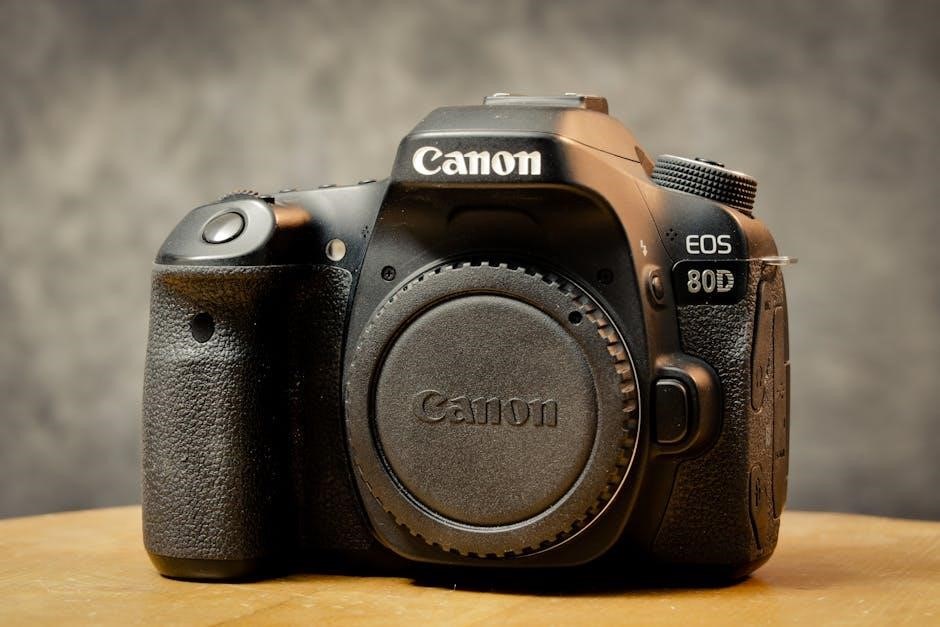
Welcome to the world of the Canon EOS 60D! This advanced digital SLR camera empowers both beginners and experienced photographers to capture stunning images. Before diving in, familiarize yourself with safety precautions and handling guidelines (p;305, 306, 12, 13).
The EOS 60D is compatible with SD, SDHC, and SDXC memory cards – remember a card is a separate purchase. Take test shots immediately to understand the camera’s capabilities and ensure proper recording. Canon isn’t liable for data loss due to faulty cards or cameras.
Understanding the Camera Kit Contents
Your Canon EOS 60D kit includes essential components for immediate use. Verify all items are present: the camera body (with protective cover), Battery Charger LC-E6 or LC-E6E (with optional power cord), Interface Cable, and Stereo AV Cable AVC-DC400ST.
The EOS DIGITAL Solution Disk contains software and the instruction manual. If you purchased a Lens Kit, confirm the lens is included, along with its separate manual. Carefully safeguard all components to ensure a complete and functional photography experience.
Battery and Charger (LC-E6/LC-E6E)
The Canon EOS 60D utilizes the LC-E6 or LC-E6E battery charger for powering the camera. The LC-E6E model includes a detachable power cord for direct connection. Ensure the battery is correctly inserted into the charger before plugging it in.
Charging time varies, but a full charge is recommended before initial use. Always use the designated Canon charger to avoid damage or malfunction. Proper battery care extends its lifespan and ensures reliable camera operation.
Interface Cable and AV Cable (AVC-DC400ST)
The Canon EOS 60D package includes an interface cable for connecting to a computer, enabling data transfer and remote control capabilities. Additionally, a Stereo AV Cable (AVC-DC400ST) is provided for connecting the camera to a television for viewing captured images and videos on a larger screen.
Ensure proper connections are made for optimal signal transmission. These cables facilitate seamless integration with other devices, expanding the camera’s functionality beyond standalone operation.
EOS DIGITAL Solution Disk & Manuals
The Canon EOS 60D comes with an EOS DIGITAL Solution Disk containing essential software for image browsing, editing, and management on your computer. This disk also includes a comprehensive instruction manual, providing detailed guidance on all camera features and functions.
Additionally, a separate printed Camera Instruction Manual (this booklet) is included for convenient offline reference. These resources ensure users can fully utilize the camera’s capabilities.
Safety Precautions and Handling
Prior to using your Canon EOS 60D, carefully review the important safety warnings and handling precautions to prevent accidents and ensure optimal camera performance. Always avoid looking directly into the lens when the flash fires, and refrain from disassembling or modifying the camera.
Protect the camera from extreme temperatures, humidity, and direct sunlight. Handle the camera with care to avoid damage, and always use a neck strap for secure carrying.
Important Safety Warnings
To ensure safe operation, never disassemble or modify the Canon EOS 60D. Avoid looking directly into the flash during operation, as it may cause temporary vision impairment. Keep the camera away from water and flammable materials.
Do not leave the camera in direct sunlight or extreme temperatures for extended periods. Canon assumes no liability for issues arising from improper use or failure to heed these warnings, including potential data loss.
Handling Precautions for the Camera
Protect the EOS 60D from shocks and impacts; handle with care. Avoid touching the camera’s electrical contacts. Clean the exterior with a soft, dry cloth – do not use solvents.
Ensure the battery compartment is securely closed. Do not store the camera with the battery installed for prolonged periods. Canon is not responsible for damage caused by improper handling or storage, or from using non-genuine accessories.
Getting Started: Initial Setup
Begin by inserting a compatible SD, SDHC, or SDXC card (not included) into the card slot. Format the card using the camera’s menu for optimal performance. Next, charge the battery (LC-E6/LC-E6E) using the provided charger.
Once charged, power on the camera and follow the on-screen prompts to set the initial date, time, and language preferences. Take test shots to familiarize yourself with the camera’s functions.
Inserting and Formatting Memory Cards (SD, SDHC, SDXC)
The Canon EOS 60D supports SD, SDHC, and SDXC memory cards, referred to simply as “card” in this manual. Ensure the camera is off before inserting a card into the slot. To format, navigate to the menu and select the ‘Format’ option.
Formatting erases all data, so back up important files beforehand. Formatting ensures compatibility and optimal performance with your camera. Always format cards in the camera itself.
Charging the Battery
Use the supplied Battery Charger LC-E6 or LC-E6E to charge the battery. The LC-E6E includes a power cord; Connect the charger to a power outlet and insert the battery, ensuring correct polarity. The charge lamp will illuminate, indicating charging is in progress.
Charging time varies, but a fully depleted battery will take approximately 2-4 hours. Once fully charged, the lamp will change or turn off.
Powering On and Initial Settings

To power on the camera, move the power switch to the ON position. The camera will perform a self-check. You’ll be prompted to set the date, time, and language upon initial startup. Use the buttons and dial to navigate and confirm your selections.
Ensure a formatted memory card is inserted before proceeding. Take test shots to familiarize yourself with the camera’s operation and image quality.
Understanding the Camera Body and Controls
The Canon EOS 60D features a robust body with intuitive controls for seamless operation. Familiarize yourself with the top and rear panel controls, including the mode dial, buttons, and dials. The mode dial allows selection of various shooting modes – Auto, Program, Aperture Priority, Shutter Priority, Manual, and creative options.
Understanding these controls is crucial for mastering the camera’s capabilities and achieving desired photographic results.
Top Panel Controls
The EOS 60D’s top panel houses essential controls for quick adjustments. The power switch, mode dial, and shutter button are prominently positioned for easy access. The mode dial selects shooting modes, while the control dial adjusts settings like aperture and shutter speed.
Additionally, a quick control dial and set button facilitate efficient menu navigation and parameter adjustments during shooting, enhancing responsiveness and creative control.
Rear Panel Controls
The rear panel of the Canon EOS 60D features a comprehensive layout for image review and settings adjustments. A large 3.0-inch LCD screen provides a clear view for composing shots and reviewing captured images. The directional buttons and SET button navigate menus and confirm selections.
Dedicated buttons offer direct access to key functions like Live View, image playback, and menu display, streamlining workflow and enhancing user experience.
Mode Dial and Shooting Modes
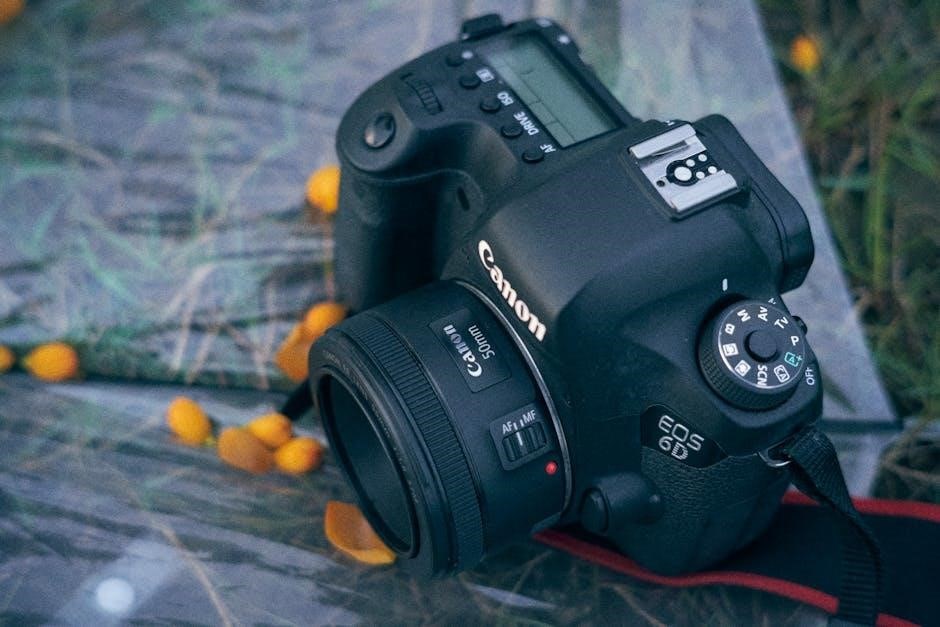
The Mode Dial on the EOS 60D offers versatile shooting options for various scenarios. It includes fully automatic modes like ‘Scene Intelligent Auto’ for effortless photography, and semi-manual modes like ‘Program’ (P), ‘Tv’ (Shutter Priority), and ‘Av’ (Aperture Priority) for creative control.
Manual (M) mode grants full control over settings, while dedicated modes like ‘Portrait,’ ‘Landscape,’ and ‘Sports’ optimize settings for specific subjects. A dedicated ‘Video’ mode enables high-definition video recording.
Shooting Basics
Beginner photographers will quickly grasp the fundamentals with the Canon EOS 60D. Taking test shots is crucial for familiarizing yourself with the camera’s response and image quality. Immediately review captured images to understand the impact of your settings.
Mastering exposure – aperture, shutter speed, and ISO – is key. Experiment with focusing modes to achieve sharp images. Remember to check images after shooting to ensure proper recording, as Canon isn’t liable for faulty recordings.
Taking Test Shots and Reviewing Images
The EOS 60D’s digital advantage allows immediate image review. While reading this manual, actively take test shots to visualize how settings affect results. This hands-on approach accelerates learning and understanding of the camera’s capabilities.
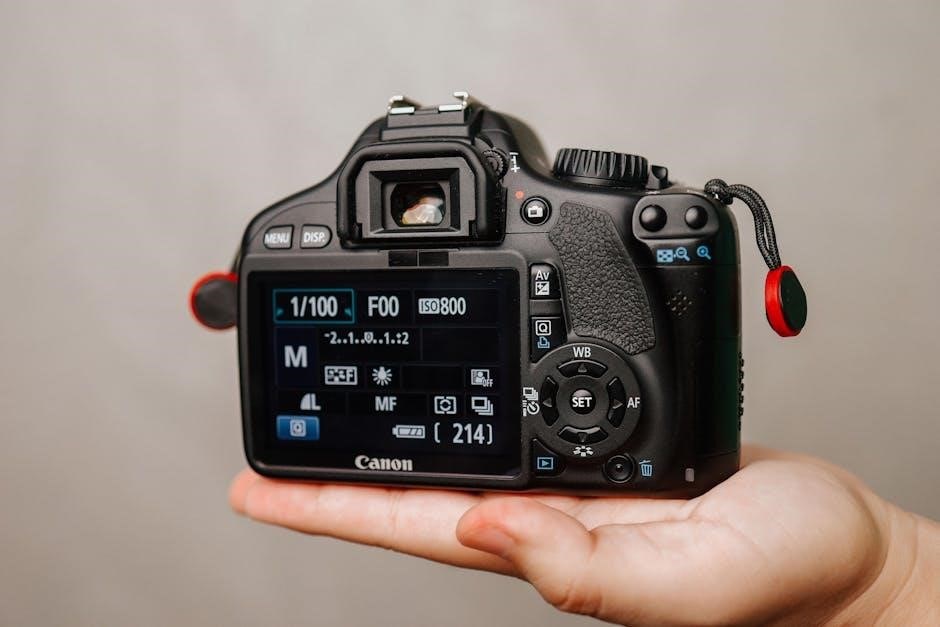
After each shot, playback and carefully inspect the image. Confirm proper recording; Canon assumes no liability for issues stemming from faulty cards or camera malfunctions. This proactive check prevents potential loss or inconvenience, ensuring successful photography.
Understanding Exposure: Aperture, Shutter Speed, and ISO
Mastering exposure is crucial for photographic control. Aperture controls depth of field, influencing how much of the image is in focus. Shutter speed dictates motion blur or freezing action, while ISO determines the camera’s sensitivity to light.
These three elements work together to create a properly exposed image. Experimenting with each setting allows you to achieve desired creative effects, balancing brightness, sharpness, and noise levels for optimal results with your EOS 60D.
Focusing Modes and Techniques
The Canon EOS 60D offers various focusing modes for different shooting scenarios. One-Shot AF is ideal for stationary subjects, while AI Servo AF tracks moving subjects continuously. Manual Focus provides precise control when autofocus struggles.
Utilize the autofocus points strategically for accurate focusing. Explore techniques like back-button focus for enhanced control. Understanding these modes and techniques ensures sharp, well-focused images, maximizing the potential of your camera.
Advanced Shooting Features
The EOS 60D boasts features beyond basic photography. Live View shooting allows composing images on the LCD screen, useful for precise framing and video recording. Speaking of video, the camera supports high-definition recording, offering creative possibilities.
Furthermore, explore the Creative Filters and Effects to add unique styles to your photos directly in-camera. These advanced features empower you to experiment and achieve professional-looking results with ease, expanding your artistic vision.
Live View Shooting
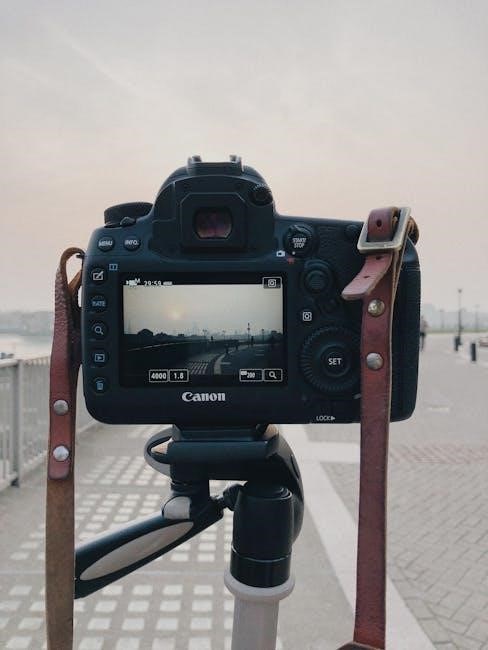
Live View enables composing and reviewing images on the camera’s LCD screen, offering a detailed preview of your shot. This mode is particularly useful for precise focusing, especially when using a tripod, and for video recording. It allows for accurate framing and assessment of exposure before capturing the image.
Utilize Live View for situations demanding meticulous composition or when shooting from awkward angles, enhancing your control and creative possibilities. Remember to monitor battery consumption during extended Live View use.
Video Recording Capabilities
The Canon EOS 60D boasts impressive Full HD video recording capabilities, allowing you to capture high-quality moving images with ease. Record videos at various frame rates, including 1080p at 30, 25, or 24 frames per second, offering flexibility for different creative projects.
Utilize the Live View mode for accurate framing during video recording. External microphones can be connected for enhanced audio quality, crucial for professional-looking results. Be mindful of storage space and battery life during extended recording sessions.
Creative Filters and Effects
The EOS 60D offers a range of creative filters and effects to enhance your photos and videos directly within the camera. Experiment with options like Grain, Soft Focus, Monochrome, and Color Emphasis to achieve unique artistic styles without post-processing.
These filters allow for instant visual transformations, adding character and mood to your images. Explore the different settings within each filter to fine-tune the effect to your preference. Remember to review your images after applying filters to ensure the desired outcome.
Menu System Navigation
The Canon EOS 60D features an intuitive menu system organized into several tabs for easy access to settings. Understanding this structure is crucial for customizing your camera. Navigate using the directional buttons and SET button to explore options for shooting, image quality, autofocus, and more.
Familiarize yourself with the menu layout to quickly adjust settings during shooting. The menu allows for detailed control over camera functions, enabling you to tailor the camera to your specific needs and preferences.
Understanding the Menu Structure
The EOS 60D’s menu is divided into tabs: Shooting, AF, Exposure, Picture Style, Quality, Setup, Custom Functions, and others. Each tab contains related settings. Use the directional buttons to highlight a tab, then press SET to enter. Within each tab, navigate using the same buttons and confirm changes with SET.
The structure allows efficient access to specific functions. Remember to explore each tab to fully understand the camera’s capabilities and customize it to your shooting style.
Customizing Camera Settings
The Canon EOS 60D offers extensive customization options through its menu system. Custom Functions (CF) allow assigning operations to buttons for quicker access. Adjust Picture Styles to tailor image appearance (Standard, Portrait, Landscape, etc.). Modify Auto Lighting Optimizer for improved dynamic range.
Personalize the button controls and display settings to match your preferences. Experiment with these settings to optimize the camera for your specific shooting needs and workflow.
Setting Date, Time, and Language
Accurate date and time are crucial for proper image organization and metadata. Access the Date/Time Setting menu within the camera’s settings. Use the touchscreen or buttons to input the correct year, month, day, hour, and minute. Select your preferred language from the available options.
Correct settings ensure proper timestamping of photos and videos. Remember to double-check these settings, especially after replacing the battery, to maintain accurate records.
Connectivity and Data Transfer
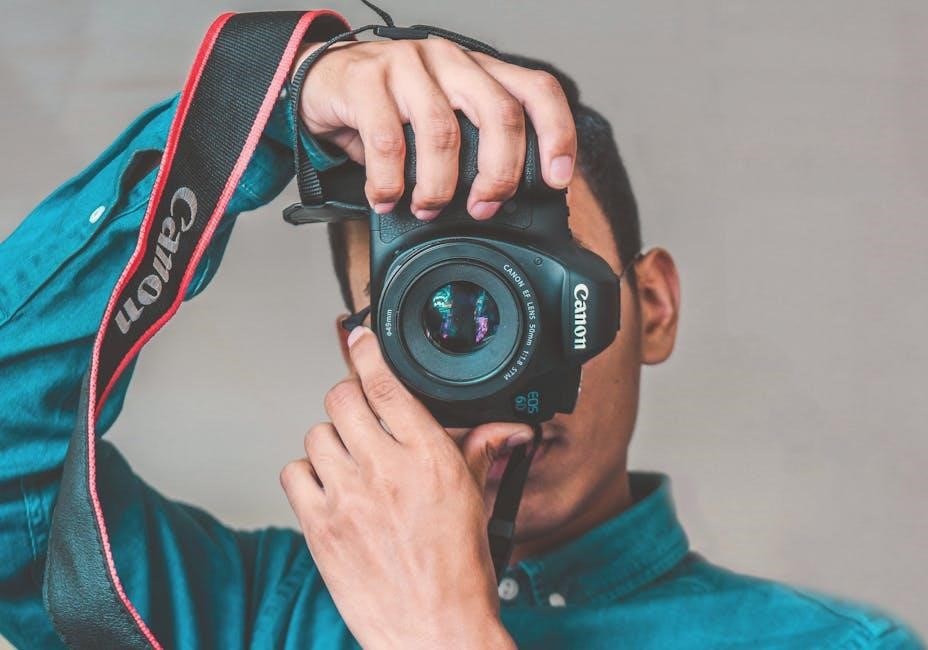
Transferring images from your Canon EOS 60D is straightforward. Utilize the included Interface Cable to connect the camera directly to your computer via USB. Alternatively, use an AV Cable (AVC-DC400ST) to connect to a TV for immediate viewing;
For wireless transfer, an optional accessory is required. Ensure the camera is powered off during cable connections. Proper data transfer ensures safe storage and easy sharing of your captured memories.
Connecting to a Computer via USB
To connect your Canon EOS 60D to a computer using USB, first ensure the camera is powered off. Use the supplied Interface Cable and connect it to the camera’s USB port and a USB port on your computer. Power on the camera.
Your computer should recognize the camera as a removable drive. You can then easily transfer images and videos. Follow your operating system’s instructions for file transfer.
Connecting to a TV via AV Cable
To view your EOS 60D’s images and videos on a television, use the supplied Stereo AV Cable (AVC-DC400ST). Connect the cable’s yellow plug to the TV’s video input, and the red and white plugs to the corresponding audio inputs.
Connect the other end of the cable to the camera’s AV OUT jack. Select the appropriate video output on your TV. Power on both the camera and TV, then set the camera to playback mode to view your content.
Using Wireless File Transfer (Optional Accessory)
For convenient wireless image and video transfer, the Canon EOS 60D supports optional wireless accessories. These allow you to send files directly to smartphones, tablets, or computers without a cable connection.
Refer to the accessory’s separate instruction manual for detailed setup and operation. Ensure the accessory is compatible with your EOS 60D and follow the pairing instructions carefully. Wireless transfer speeds may vary depending on the environment and device.
Troubleshooting Common Issues
Encountering problems? This section addresses frequent issues with your Canon EOS 60D. Image quality concerns, such as blurry photos, can often be resolved by checking focus settings and using appropriate ISO levels. Camera operation errors might indicate a low battery or card issue.
If images aren’t recording or downloading, verify card compatibility and ensure it’s properly formatted. Canon isn’t liable for lost data due to faulty cards; always back up your files!
Image Quality Problems
Poor image quality often stems from incorrect camera settings. Blurry images frequently indicate focusing issues – ensure your subject is within the focus area and utilize appropriate focusing modes. Noise or graininess can be reduced by lowering the ISO setting, especially in bright conditions.
Check your aperture for desired depth of field. Remember Canon isn’t responsible for images lost due to faulty memory cards, so regular backups are crucial!
Camera Operation Errors
If the Canon EOS 60D displays an error message, first try turning the camera off and on again. If the problem persists, consult the manual’s troubleshooting section for specific error codes and solutions. Ensure the battery is fully charged and the memory card is properly inserted.
Canon isn’t liable for lost images due to camera or card malfunctions. Always review images after shooting to confirm proper recording. Refer to the manual for detailed guidance.
Memory Card Issues
The Canon EOS 60D supports SD, SDHC, and SDXC cards – referred to as “card” in the manual. If the camera doesn’t recognize a card, ensure it’s correctly inserted and not locked. Formatting the card in the camera is recommended before first use, and periodically thereafter.
Canon assumes no liability for data loss due to faulty cards. Always back up important images to a computer. Purchase cards separately, as they aren’t included with the camera.
Legal Information and Copyright
Please be aware of copyright laws in your country regarding the use of images captured with your Canon EOS 60D. Restrictions may apply to photographing people or specific subjects for anything beyond private enjoyment. Public performances and exhibitions may also prohibit photography.
Canon is not liable for issues arising from faulty memory cards or inability to record/download images. Always check image playback after shooting to verify proper recording.
Copyright Laws and Image Usage
Understand that copyright laws within your jurisdiction may restrict the usage of images captured with the EOS 60D. Utilizing recorded images of individuals or certain subjects for purposes beyond personal enjoyment could be prohibited. Be mindful of potential restrictions at public performances, exhibitions, or other events where photography might be disallowed, even for private use.
Always respect intellectual property rights and adhere to applicable legal regulations when sharing or publishing your photographs.
Canon’s Liability and Warranty
Canon assumes no liability for issues arising from faulty cameras or memory cards that result in unrecorded or undownloadable images; Always playback and verify image recording after shooting. Before use, thoroughly test the camera’s functionality. Canon’s warranty covers manufacturing defects but does not extend to data loss or inconvenience caused by equipment malfunction.
Review the full warranty details included with your EOS 60D for specific coverage terms and conditions.

Appendix: Technical Specifications
The Canon EOS 60D is compatible with SD, SDHC, and SDXC memory cards – referred to collectively as “card” within this manual. Note that a card is not included with the camera and must be purchased separately. This DSLR features immediate image review capabilities, allowing users to assess shots instantly.
Always check included kit contents upon purchase, ensuring the battery charger (LC-E6/LC-E6E) and necessary cables are present.