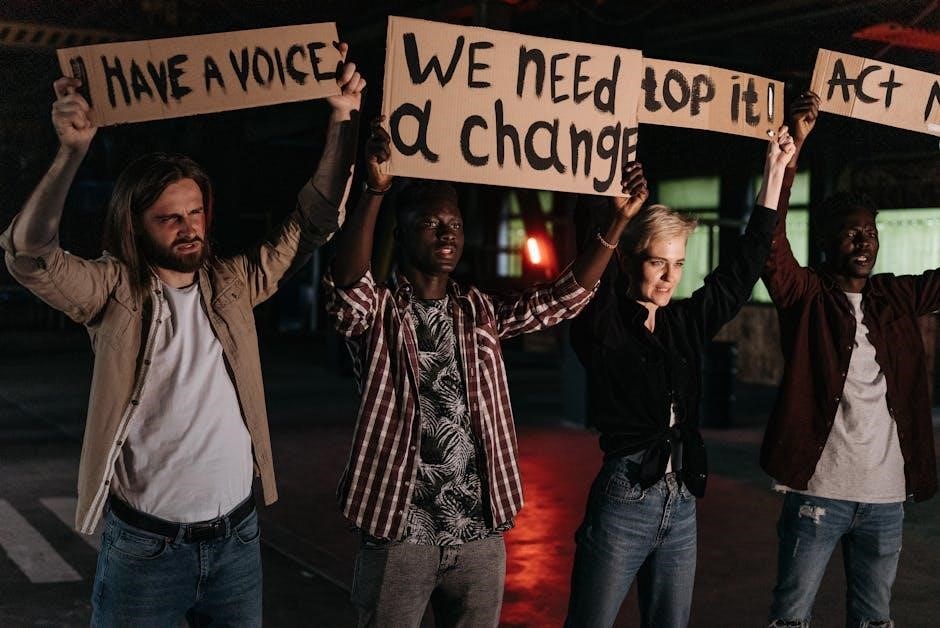
“Social Change Now” is a vital guide‚ fostering reflection and connection within the dynamic social change ecosystem‚ offering practical tools for individuals and organizations.
The Current Landscape of Social Activism
Today’s activism is characterized by a complex interplay of urgent crises and long-term systemic challenges. Movements are increasingly intersectional‚ recognizing the interconnectedness of various forms of oppression. This demands a shift from siloed approaches to collaborative strategies. Individuals are seeking ways to move beyond performative allyship and engage in meaningful‚ sustained action.
“Social Change Now” arrives at a crucial moment‚ offering a framework to navigate this landscape. It acknowledges the emotional toll of continuous activism and emphasizes the importance of self-reflection and community building. The guide responds to a need for practical resources that bridge the gap between ideals and effective action‚ particularly in areas like anti-racism and DEI initiatives.
Deepa Iyer’s Contribution and the Book’s Core Purpose
Deepa Iyer‚ a seasoned anti-oppression educator and DEI professional‚ brings extensive experience to “Social Change Now.” Her expertise informs the book’s central aim: to empower individuals and organizations to participate more effectively in social justice work. Iyer recognizes the need to move beyond theoretical understanding and cultivate practical skills.
The book’s core purpose is to provide a comprehensive guide for reflection and connection‚ introducing the social change ecosystem framework. It’s designed to help readers identify their unique roles within this ecosystem‚ clarify their values‚ and build stronger‚ more equitable communities. It’s a resource for lifelong learning and sustained engagement.

Understanding the Social Change Ecosystem
“Social Change Now” unveils a framework mapping ten distinct roles – builder‚ storyteller‚ disrupter‚ and experimenter – within the interconnected social change ecosystem.
The Ten Roles Within the Ecosystem
“Social Change Now” introduces a powerful framework identifying ten crucial roles within the social change ecosystem‚ recognizing that effective movements require diverse contributions. These roles aren’t rigid categories‚ but rather lenses through which individuals can understand their strengths and contributions. They include the Builder‚ focused on creating necessary infrastructure; the Storyteller‚ amplifying marginalized voices and narratives; and the Disrupter‚ challenging existing power structures and norms.
Further roles encompass the Experimenter‚ innovating new approaches to problem-solving; the Facilitator‚ creating inclusive spaces for dialogue; the Healer‚ tending to the emotional well-being of activists; and the Networker‚ connecting individuals and organizations. The Resource Mobilizer secures vital support‚ while the Advocate champions policy changes. Finally‚ the Visionary articulates a compelling future‚ and the Guardian protects the integrity of the movement. Understanding these roles empowers individuals to strategically engage in social change.
The Builder Role: Creating Infrastructure
The Builder role‚ as outlined in “Social Change Now‚” is fundamental to sustaining any social movement. Builders focus on establishing the essential organizational structures and logistical support needed for long-term effectiveness. This encompasses tasks like developing databases‚ managing finances‚ securing office space‚ and creating communication systems. They are the architects of stability‚ ensuring the movement has a solid foundation to operate from.
Builders aren’t necessarily front-line activists; their strength lies in their organizational skills and dedication to practical implementation. They understand that impactful change requires consistent‚ behind-the-scenes work. Their contributions are often unseen‚ yet absolutely vital for the movement’s overall success and longevity.
The Storyteller Role: Amplifying Voices
“Social Change Now” highlights the Storyteller role as crucial for shifting narratives and building empathy. Storytellers center the experiences of those most impacted by injustice‚ ensuring their voices are heard and understood. This involves crafting compelling narratives through various mediums – writing‚ art‚ film‚ or oral tradition – to connect with wider audiences on an emotional level.
Effective Storytellers don’t just share information; they humanize struggles and inspire action. They challenge dominant perspectives and create space for marginalized voices to be recognized and valued. Their work is essential for fostering solidarity and mobilizing support for social change initiatives‚ making the invisible visible.
The Disrupter Role: Challenging Systems
“Social Change Now” identifies the Disrupter role as vital for confronting and dismantling oppressive systems. Disrupters directly challenge the status quo‚ employing tactics like protests‚ civil disobedience‚ and strategic non-compliance to expose injustices and demand systemic change. This role isn’t about chaos‚ but about intentionally interrupting harmful patterns and power structures.
Effective Disrupters understand the root causes of inequality and target the systems that perpetuate them. They are willing to take risks and face consequences to create openings for transformation. Their actions often spark critical conversations and force those in power to address long-ignored issues‚ paving the way for more equitable systems.

The Experimenter Role: Innovating Approaches
“Social Change Now” highlights the Experimenter as crucial for developing novel solutions to complex social problems. These individuals and groups aren’t afraid to try new tactics‚ pilot programs‚ or organizational models‚ recognizing that traditional approaches often fall short. Experimenters embrace a mindset of continuous learning and adaptation.
They prioritize testing ideas‚ gathering data‚ and iterating based on results. This role fosters creativity and resilience within the social change ecosystem‚ offering alternatives to established norms. Experimenters often lead the way in identifying more effective and equitable strategies‚ pushing boundaries and inspiring others to innovate.
Identifying Your Role(s) in the Ecosystem
“Social Change Now” emphasizes that most individuals embody multiple roles within the social change ecosystem‚ not just one. Self-reflection is key to understanding where your strengths and passions lie. The guide provides prompts to help you assess which roles – Builder‚ Storyteller‚ Disrupter‚ Experimenter‚ and others – resonate most with your current work and experiences.
Recognizing your roles allows for strategic collaboration and a more holistic approach to social justice. It also helps to appreciate the contributions of others‚ fostering a stronger and more interconnected movement. Understanding your place within the ecosystem maximizes impact and prevents burnout.
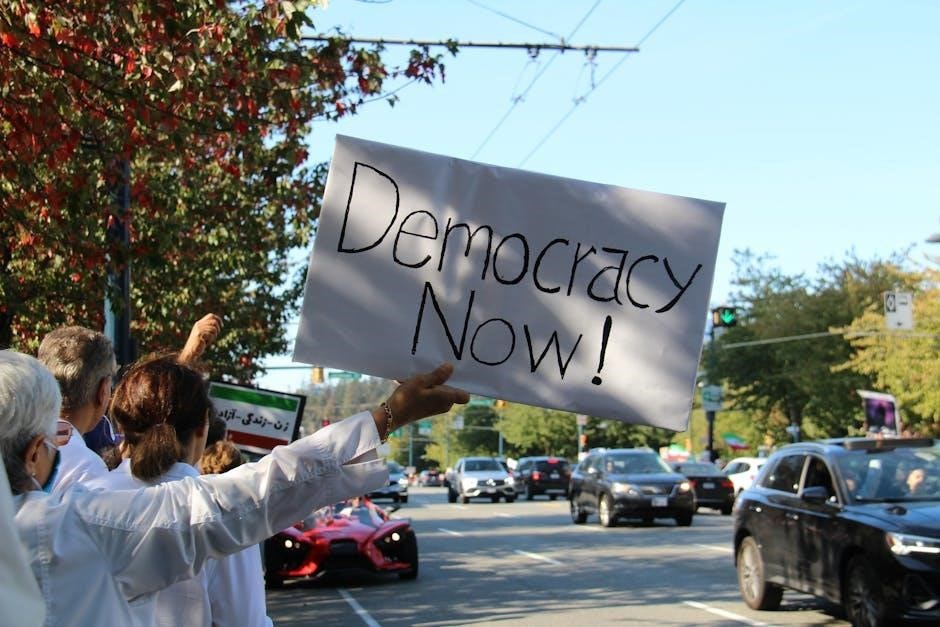
Values Clarification for Effective Change
“Social Change Now” highlights the crucial link between personal values and impactful social justice work‚ offering prompts for deep self-reflection and alignment.
The Importance of Personal Values in Social Justice Work
“Social Change Now” emphasizes that effective social justice work is deeply rooted in a clear understanding of one’s own values. These core beliefs act as a compass‚ guiding actions and ensuring authenticity throughout the often-challenging journey of change. Ignoring personal values can lead to burnout‚ internal conflict‚ and ultimately‚ less impactful work.
The guide encourages individuals to actively identify and articulate their values‚ recognizing that these may evolve over time. This process isn’t simply about stating what one believes in‚ but about understanding why those beliefs are held and how they translate into concrete actions. A strong values foundation provides resilience and clarity when navigating complex social issues and inevitable setbacks‚ fostering sustainable engagement in the long term.
Reflection Prompts for Identifying Core Values
“Social Change Now” provides detailed reflection prompts designed to help individuals uncover their core values. These aren’t simple questionnaires‚ but invitations to deeply consider past experiences and emotional responses. Prompts might include: “Recall a time you felt most energized while working towards a cause – what values were being honored in that moment?” or “Think of a situation where you felt deeply conflicted; what values were in tension?”
The guide encourages journaling and honest self-assessment‚ providing space to write responses and explore nuances. It emphasizes that identifying values is an iterative process‚ requiring ongoing introspection and willingness to challenge pre-conceived notions. This self-discovery is crucial for aligning actions with beliefs and building a sustainable commitment to social change.
Aligning Actions with Values
“Social Change Now” stresses that identifying core values is only the first step; the true power lies in aligning actions with those values. The guide prompts readers to examine current commitments and ask: “Do my daily activities reflect what I truly believe in?” or “Are there areas where my behavior contradicts my stated values?”
It encourages a critical assessment of how time and energy are allocated‚ suggesting adjustments where misalignment exists. This might involve shifting priorities‚ saying “no” to opportunities that don’t resonate‚ or actively seeking out avenues for value-driven engagement. The book emphasizes that authentic social change stems from integrity and consistency between beliefs and behaviors.

Strengthening Social Change Ecosystems
“Social Change Now” advocates for building connected communities and fostering equitable systems‚ crucial for sustained progress and collective impact in social justice work.
Building Connected Communities
“Social Change Now” emphasizes that effective social change isn’t a solitary pursuit; it thrives within interconnected communities. The book encourages intentional relationship-building across different roles within the ecosystem – builders connecting with storytellers‚ disruptors collaborating with experimenters. This interconnectedness fosters shared learning‚ mutual support‚ and amplified impact.
Deepa Iyer’s guide highlights the importance of recognizing and valuing the contributions of diverse individuals and organizations. By actively seeking out and engaging with those holding different perspectives and skills‚ we can create more resilient and effective movements; It’s about moving beyond siloed efforts and embracing a collaborative spirit to address complex social challenges‚ ultimately building a stronger‚ more unified force for positive change.
Fostering Equitable Systems
“Social Change Now” doesn’t just advocate for change‚ but for equitable systems – those designed to dismantle oppressive structures and ensure just outcomes for all. Iyer’s framework pushes beyond surface-level solutions‚ urging a deep examination of power dynamics and systemic inequalities. The book stresses the necessity of centering marginalized voices in the design and implementation of change initiatives.
Creating equitable systems requires a commitment to anti-oppression principles and a willingness to challenge existing norms. It’s about proactively addressing root causes‚ not just symptoms‚ and building systems that prioritize fairness‚ inclusion‚ and accountability. This guide provides tools to analyze systems‚ identify biases‚ and advocate for policies that promote genuine equity and lasting social transformation.
Practical Application & Real-World Examples
“Social Change Now” delivers detailed case studies‚ reflection prompts‚ and accessible tips‚ empowering immediate action and bridging the gap between theory and practice.
Case Studies of Successful Social Change Initiatives
“Social Change Now” illuminates impactful initiatives through compelling case studies‚ showcasing diverse approaches to social justice. These examples demonstrate how individuals and organizations have effectively navigated complex challenges‚ utilizing the ten roles within the social change ecosystem. The book doesn’t merely present successes; it analyzes the strategies employed‚ the obstacles overcome‚ and the lessons learned.
Readers gain valuable insights into how builders created necessary infrastructure‚ storytellers amplified marginalized voices‚ and disruptors challenged oppressive systems. Furthermore‚ the case studies highlight the power of experimentation and innovation in driving meaningful change. By examining these real-world applications‚ the guide empowers readers to adapt proven methods to their own contexts and contribute to a more equitable world.
Accessible Tips for Immediate Action
“Social Change Now” doesn’t just offer theory; it provides readily applicable tips for immediate engagement. These actionable steps empower individuals to contribute to social change‚ regardless of their experience level or available resources. The guide encourages self-reflection to identify personal strengths and align actions with core values.
Practical suggestions range from engaging in mindful conversations to supporting grassroots organizations and advocating for policy changes. Readers are prompted to utilize the ecosystem framework to pinpoint areas where they can make the most significant impact. These accessible tips transform intention into tangible action‚ fostering a sense of agency and collective power.

“Social Change Now” as a Resource for Different Groups
“Social Change Now” serves diverse groups – educators‚ organizations‚ and activists – supporting lifelong journeys toward building connected communities and equitable systems.
Utilizing the Guide in Educational Settings
“Social Change Now” proves invaluable within classrooms‚ bridging the gap between stated commitments to anti-racism and concrete actions on campus. It equips young people with wisdom directly from organizers and advocates actively engaged in today’s crucial social movements.
The guide’s framework encourages critical self-reflection‚ allowing students to identify their roles within the broader social change ecosystem. Reflection prompts and practical tips facilitate immediate application of concepts‚ fostering a deeper understanding of systemic issues.
Furthermore‚ it provides a shared language and tools for navigating complex conversations around equity‚ justice‚ and anti-oppression‚ empowering the next generation of change-makers.
Supporting Organizations and Lifelong Activists
“Social Change Now” serves as a powerful resource for established organizations and dedicated lifelong activists seeking to refine their strategies and strengthen their impact. The ten-role ecosystem map provides a valuable framework for assessing internal strengths and identifying areas for collaboration.
It encourages a deeper understanding of individual contributions and how they connect to the larger movement‚ fostering more cohesive and effective teams. The guide’s emphasis on values clarification ensures actions remain aligned with core principles.
Ultimately‚ it supports sustained momentum and builds connected communities dedicated to equitable systems.
Addressing the Gap Between Ideals and Actions (Anti-Racism)
“Social Change Now” is presented as an invaluable resource for bridging the often-significant gap between stated commitments to anti-racism and concrete actions‚ particularly within institutional settings like campuses. Deepa Iyer’s expertise as an anti-oppression educator provides a crucial lens for examining systemic issues.
The guide facilitates critical self-reflection and offers practical tools to translate ideals into tangible change. It empowers individuals and organizations to move beyond performative allyship and engage in meaningful‚ sustained anti-racist work.
This framework fosters accountability and promotes equitable outcomes.

The Book’s Focus on Anti-Oppression and DEI
“Social Change Now” leverages Deepa Iyer’s expertise as a DEI professional‚ offering an invaluable resource for anti-oppression work and fostering inclusivity.
Deepa Iyer’s Expertise in DEI
Deepa Iyer brings extensive experience as an anti-oppression educator and Diversity‚ Equity‚ and Inclusion (DEI) professional to “Social Change Now.” Her background uniquely positions her to address the critical gap often found between stated commitments to anti-racism and tangible actions within institutions and communities.
The book isn’t simply theoretical; it’s grounded in Iyer’s practical work‚ offering a framework applicable to diverse settings‚ including educational environments. She provides wisdom gleaned from organizers and advocates actively engaged in current social movements. This expertise allows “Social Change Now” to serve as a powerful tool for those seeking to move beyond performative allyship and towards genuine systemic change‚ fostering a more equitable and just world.
Applying the Framework to Anti-Racism Work
“Social Change Now” provides a valuable framework specifically for advancing anti-racism efforts‚ moving beyond surface-level commitments. The book’s ecosystem map – outlining ten roles like Builder‚ Storyteller‚ and Disrupter – helps individuals identify where their skills best contribute to dismantling racist systems.
By encouraging values clarification and reflection‚ the guide prompts a deeper understanding of personal biases and motivations. This self-awareness is crucial for effective anti-racism work. Deepa Iyer’s approach emphasizes practical application‚ offering tools to translate ideals into concrete actions‚ ultimately shrinking the gap between intention and impact within organizations and communities striving for racial justice.

Navigating Crisis and Sustaining Momentum
“Social Change Now” serves as a resource during crises and for long-term journeys‚ building connected communities and fostering equitable systems consistently.
Using the Guide During Times of Crisis
“Social Change Now” proves particularly invaluable when facing urgent challenges and widespread disruption. The framework offered isn’t simply for calm periods of strategic planning; it’s designed to be actively utilized during moments demanding immediate response and collective action.
The ten roles within the ecosystem become even more critical during crises‚ highlighting who can build necessary infrastructure‚ amplify crucial voices‚ disrupt harmful patterns‚ and experiment with innovative solutions. The guide’s reflection prompts encourage rapid values clarification‚ ensuring responses are aligned with core principles even under pressure.
It provides a structure for navigating chaos‚ fostering collaboration‚ and sustaining momentum when it’s most needed‚ offering a pathway from reaction to proactive‚ values-driven change.

Long-Term Strategies for Social Change Journeys
“Social Change Now” isn’t a quick fix‚ but a companion for sustained engagement in social justice work. It emphasizes building connected communities and fostering equitable systems as ongoing processes‚ not isolated events. The ecosystem framework encourages continuous self-assessment – identifying and refining one’s role(s) over time.
The guide promotes a shift from reactive activism to proactive‚ strategic planning‚ grounded in deeply held values. It supports organizations and individuals throughout their “lifelong social change journeys‚” acknowledging that progress requires resilience‚ adaptability‚ and a commitment to continuous learning.
By prioritizing reflection and connection‚ it helps avoid burnout and fosters a sustainable approach to creating lasting impact.