Vicks thermometers offer reliable temperature readings, crucial for health monitoring.
Understanding your model and carefully reading the included instructions
are essential for accurate results and proper usage, ensuring well-being.
Understanding Vicks Thermometer Models
Vicks offers diverse thermometer models, including digital (V900G, V901G), non-contact infrared (VNT 275), and SpeedRead (V912US, V912BBUS) options. Each model features unique functionalities and intended uses.
Digital thermometers provide versatile measurement options – oral, underarm, or rectal – while non-contact infrared models offer quick, hygienic readings.
SpeedRead thermometers prioritize rapid results.
Familiarizing yourself with your specific model’s manual is paramount for optimal performance and accurate temperature assessment, ensuring reliable health monitoring.
Importance of Reading Instructions
Prior to using your Vicks thermometer, thoroughly review the provided instructions. These guidelines detail proper usage for accurate readings, encompassing preparation, positioning, and interpretation of results. Understanding how to establish your baseline normal temperature – recording readings when feeling well – is crucial.
The manual also clarifies error codes and emphasizes the importance of disposable probe covers for hygiene. Ignoring instructions can lead to inaccurate data and compromised health assessments.
Types of Vicks Thermometers
Vicks offers diverse thermometers, including digital (V900G, V901G), non-contact infrared (VNT 275), and SpeedRead models (V912US, V912BBUS), each with unique features.
Digital Thermometers (e.g., V900G, V901G)
Vicks digital thermometers, like the V900G and V901G, are versatile for oral, underarm, or rectal use. Determining your normal temperature involves recording readings when feeling well – twice daily (morning and afternoon) – and averaging them.
Always utilize disposable probe covers for hygiene and accurate readings. Remember to read and save the instructions provided with your specific model for optimal performance and safety. These thermometers provide reliable results when used correctly, aiding in monitoring health effectively.
Non-Contact Infrared Thermometers (e.g., VNT 275)
Vicks VNT 275 non-contact infrared thermometers offer convenient, hygienic temperature readings without physical contact. These models are available in both English and Spanish language manuals, ensuring accessibility for a wider user base.
Proper positioning is crucial for accuracy; consult the owner’s manual for optimal distance and consider environmental factors. These thermometers provide a quick and easy way to monitor body temperature, offering a safe alternative to traditional methods.
SpeedRead Thermometers (e.g., V912US, V912BBUS)
Vicks SpeedRead thermometers, models V912US and V912BBUS, provide rapid temperature readings. These devices come with detailed owner’s manuals, including artwork and die lines for manufacturing reference.
The instructions emphasize the importance of understanding the thermometer’s features and proper usage techniques. These models are designed for ease of use and quick results, aiding in efficient health monitoring within a household setting, as detailed in the provided documentation.
Using a Vicks Digital Thermometer
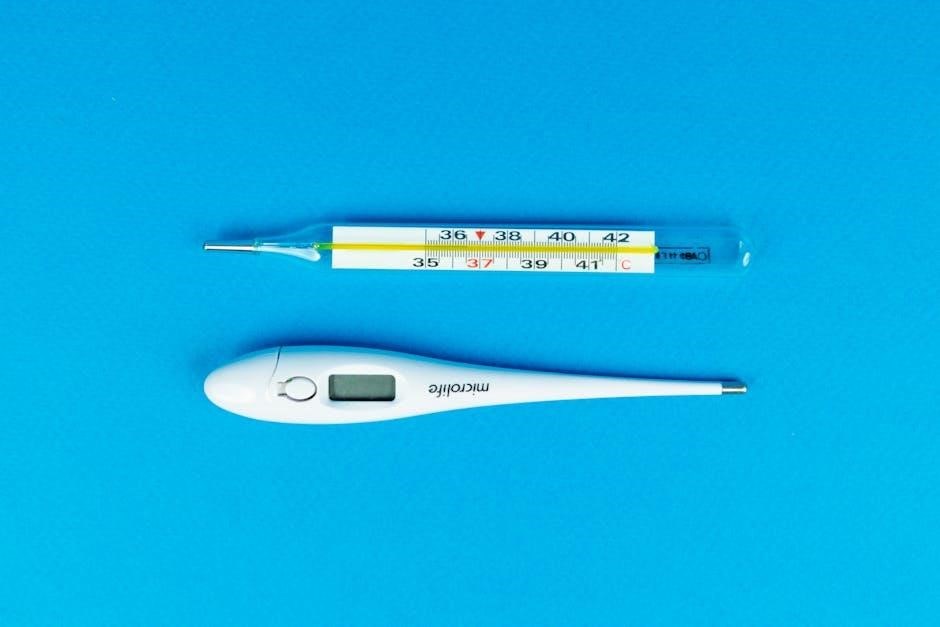
Vicks digital thermometers require preparation and proper technique for accurate readings. Utilize disposable probe covers for hygiene, and always refer to the included instructions.
Preparing the Thermometer
Before each use, ensure your Vicks digital thermometer is clean and functioning correctly. Attach a fresh, disposable probe cover securely over the sensor. This vital step maintains hygiene and prevents cross-contamination. Power on the device and verify the display illuminates and functions as expected. Familiarize yourself with the display symbols and error codes detailed in the instruction manual. Proper preparation guarantees accurate temperature measurements and contributes to reliable health monitoring for you and your family.
Taking Oral Temperature
For accurate oral readings, position the Vicks thermometer tip under the tongue, towards the back of the mouth. Ensure the mouth is closed gently around the probe, avoiding biting down. Hold the thermometer steady until it beeps, indicating a completed reading. Do not eat or drink anything hot or cold for at least fifteen minutes prior to taking an oral temperature, as this can affect results. This method is suitable for individuals who can cooperate and hold the thermometer still.
Taking Underarm Temperature
To take an underarm temperature, ensure the armpit is dry. Place the Vicks thermometer probe firmly in the center of the armpit, and close the arm snugly against the body. Hold the arm in place throughout the measurement process to maintain consistent contact. Underarm readings generally take longer than oral or rectal measurements, and may be slightly less accurate. Add approximately one degree Fahrenheit (0.5 degrees Celsius) to the reading for a more accurate core body temperature estimate.
Taking Rectal Temperature
Rectal temperatures provide the most accurate core body temperature reading, especially for infants and young children. Gently lubricate the Vicks thermometer probe with petroleum jelly. Carefully insert the probe no more than 1/2 to 1 inch into the rectum. Hold the thermometer in place until it beeps. Rectal readings are typically 0.5 to 1 degree Fahrenheit (0.3 to 0.6 degrees Celsius) higher than oral readings; consider this when interpreting results. Always use caution and gentle handling.

Using a Vicks Non-Contact Infrared Thermometer
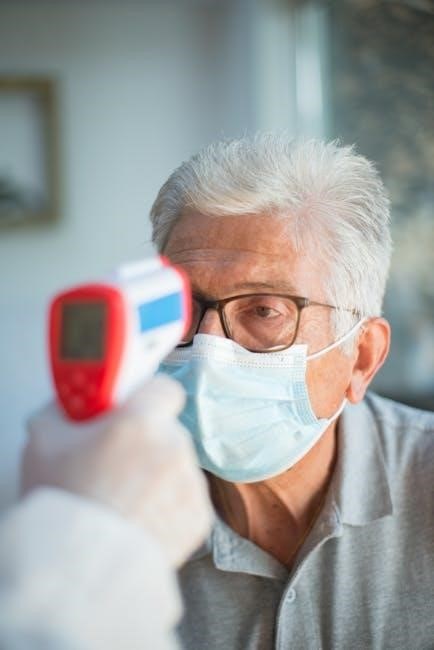
Vicks non-contact thermometers quickly measure temperature from a distance. Proper positioning and understanding environmental factors are key for obtaining accurate and reliable readings.
Proper Positioning for Accurate Readings
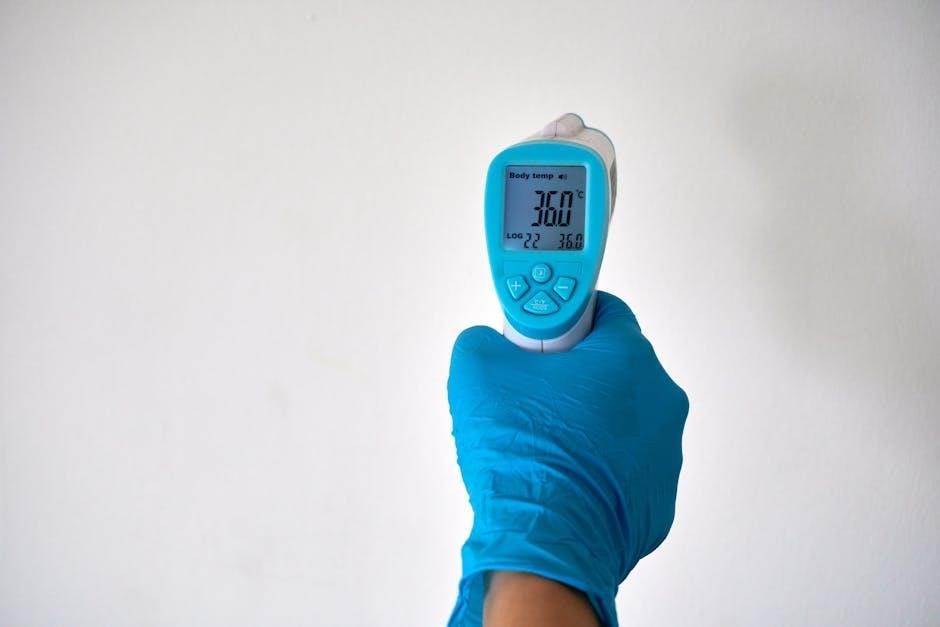
For optimal accuracy with your Vicks non-contact thermometer, center the device on the forehead, maintaining the recommended distance specified in your model’s instructions. Avoid measuring temperature after exercising, bathing, or coming indoors from extreme weather. Ensure there’s no direct sunlight or drafts affecting the reading.
Hold the thermometer steadily during measurement. Hair, sweat, or lotions on the forehead can interfere with results, so ensure the area is clean and dry. Consistent positioning is vital for comparable readings over time, aiding in effective health monitoring.
Understanding Distance and Environmental Factors
Vicks non-contact thermometers require a specific distance for accurate readings – consult your model’s manual. Environmental factors significantly impact results; avoid measuring in direct sunlight, near air conditioning, or after recent physical activity. Room temperature fluctuations can also influence readings, so maintain a stable environment.
Ensure no obstructions, like hair or sweat, are present on the forehead. Consistent distance and controlled environmental conditions are crucial for reliable temperature assessment and effective health tracking.
Determining Your Normal Temperature
Establishing a baseline requires recording temperatures when feeling well – twice daily, morning and afternoon – then calculating the average for a personal normal reading.
Establishing a Baseline
To accurately determine your normal temperature range with a Vicks thermometer, consistent monitoring is key. When you are feeling completely well, take your temperature twice each day – once in the early morning and again in the late afternoon. This provides a broader representation of your typical body temperature fluctuations.
Record each reading carefully, noting the time and method used (oral, underarm, etc.). Consistent methodology is vital for reliable data. By tracking these temperatures over a few days, you’ll establish a personalized baseline for comparison when you’re feeling unwell.
Recording Temperatures
Maintaining a detailed temperature log is crucial when establishing your baseline and monitoring potential illness. Note the date, time, and method used for each reading – oral, underarm, or rectal – as these can influence results. Include any relevant symptoms you’re experiencing alongside the temperature.
A simple notebook or a digital spreadsheet works well for this purpose. Consistent and accurate recording allows for easy comparison and helps identify trends, providing valuable information for healthcare professionals.
Calculating Average Temperature
To determine your normal temperature, record readings twice daily – in the early morning and late afternoon – over several days when feeling healthy. After collecting sufficient data, sum all recorded temperatures and divide by the total number of readings.
This calculation provides a reliable average representing your baseline. Any significant deviation from this average may indicate a fever or other health concern, prompting further evaluation. Consistent averaging ensures accuracy.

Probe Covers and Hygiene
Disposable probe covers, included with your Vicks thermometer, are vital for maintaining hygiene and preventing cross-contamination during each temperature measurement.
Using Disposable Probe Covers
Vicks digital thermometers come equipped with disposable probe covers, essential for sanitary temperature taking. Always use a fresh, clean cover with each individual measurement to prevent the spread of germs and ensure accurate readings. Gently stretch the cover over the thermometer’s probe, ensuring a secure fit. After use, carefully discard the used cover and never reuse it.
These covers contribute significantly to maintaining hygiene and protecting both the user and the thermometer itself from potential contamination.
Cleaning and Disinfecting the Thermometer
To maintain hygiene and accuracy, regularly clean and disinfect your Vicks thermometer. After each use, wipe the probe with a soft cloth dampened with isopropyl alcohol (70%). Ensure no liquid enters the thermometer’s internal components. Avoid harsh chemicals or abrasive cleaners, as they may damage the device.
Allow the thermometer to air dry completely before storing. Proper cleaning extends the lifespan and ensures reliable performance.
Troubleshooting Common Issues
If encountering inaccurate readings or a low battery indicator, consult the user manual. Replacing batteries and ensuring proper usage often resolves these problems quickly.
Inaccurate Readings
Experiencing inconsistent or inaccurate temperature readings with your Vicks thermometer requires careful investigation. First, verify correct usage according to the instruction manual – improper positioning significantly impacts results. Ensure the probe has a fresh, properly applied disposable cover, if applicable. Confirm a fully charged battery, as low power can cause errors.
Environmental factors, like extreme temperatures, can also influence readings. If issues persist, re-establish your baseline temperature when feeling well, and compare current readings. If discrepancies continue, consider contacting customer support for assistance or potential calibration needs.
Low Battery Indicator
A flashing low battery symbol on your Vicks thermometer’s display signals the need for replacement. Don’t dismiss this warning; a weakening battery can compromise accuracy, leading to unreliable temperature readings. Immediately replace the battery with a fresh one of the correct type, as specified in the instruction manual.
Continued use with a low battery may produce inaccurate results. Always ensure a fully charged battery for dependable performance, especially when monitoring a fever or health condition. Regular battery checks are a proactive step towards reliable temperature measurement.
Safety Precautions
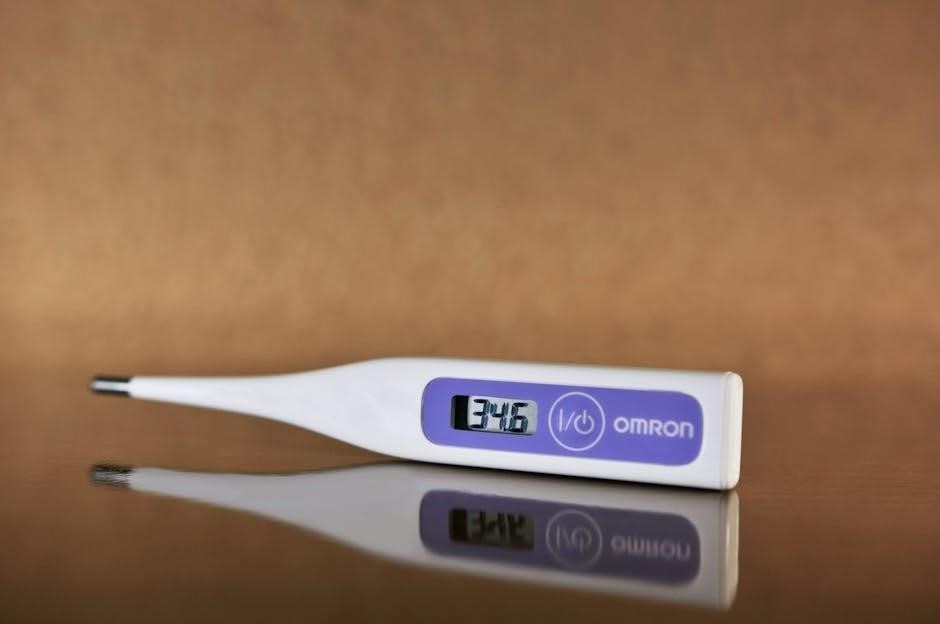
Always handle Vicks thermometers with care, avoiding drops or submersion. Keep batteries out of reach of children, and follow storage guidelines
for optimal function.
General Safety Guidelines
When utilizing a Vicks thermometer, prioritize safety for all users. Never leave a child unattended with a thermometer, as small parts pose a choking hazard. Avoid using a damaged thermometer; inspect for cracks or malfunctions before each use. Do not attempt to disassemble or modify the device. Always adhere to the recommended temperature ranges for each measurement site – oral, rectal, or axillary – to prevent discomfort or injury. Proper hygiene, including the use of disposable probe covers, is crucial to prevent cross-contamination. Store the thermometer in a safe, dry location, away from extreme temperatures and direct sunlight.
Storage and Maintenance
To ensure longevity and accuracy, proper storage and maintenance are vital. Keep your Vicks thermometer in a cool, dry place, shielded from direct sunlight and extreme temperatures. Remove batteries when storing for extended periods to prevent leakage and corrosion. Regularly clean the thermometer’s probe with isopropyl alcohol after each use, especially after rectal or oral measurements. Avoid harsh chemicals or abrasive cleaners. Store probe covers in a clean, dry environment. Inspect the device periodically for any signs of damage, and discontinue use if issues arise.

Understanding the Display
The Vicks thermometer display clearly shows temperature readings and error codes. Familiarize yourself with these codes, as they indicate potential issues or improper usage.
Reading the Temperature Display
The Vicks thermometer’s display presents the measured temperature, typically in Fahrenheit or Celsius, depending on your selected setting. Ensure you’ve chosen the correct unit before taking a reading. A stable temperature reading indicates completion; a flashing display suggests continued measurement. Pay attention to any symbols displayed alongside the temperature, as these can signify low battery power or an error condition. Understanding these indicators is vital for interpreting the results accurately and ensuring reliable health monitoring. Always refer to your specific model’s manual for detailed display information.
Error Codes and Their Meanings
Vicks thermometers utilize error codes to signal potential issues. A “Lo” or flashing “L” often indicates a low battery, requiring replacement for accurate readings. Other codes might suggest a malfunction or improper usage. Consult your thermometer’s manual to decipher specific error messages. Ignoring these signals could lead to inaccurate temperature assessments. Addressing the issue promptly – whether it’s a battery change or contacting support – ensures reliable performance and dependable health monitoring.
Vicks Thermometer Features
Vicks thermometers boast convenient features like memory recall for tracking temperature history and an auto shut-off function to conserve battery life, enhancing usability.
Memory Function
Vicks thermometers often include a memory function, allowing users to recall previous temperature readings. This feature is incredibly valuable for monitoring fever progression or tracking temperature changes over time, aiding in identifying trends. By storing past measurements, it simplifies sharing information with healthcare professionals. The ability to review historical data provides a more comprehensive understanding of a patient’s health status, supporting informed decision-making and effective care. Regularly checking and clearing the memory, as outlined in your thermometer’s manual, ensures optimal performance.
Auto Shut-Off Feature
Vicks thermometers are frequently equipped with an auto shut-off feature, designed to conserve battery life. This convenient function automatically powers down the device after a period of inactivity, typically a few minutes. It’s a practical energy-saving measure, preventing unnecessary battery drain when the thermometer isn’t in use. Refer to your specific model’s instructions to understand the exact shut-off duration. This feature enhances usability and contributes to the longevity of your Vicks thermometer.