Understanding Golfer’s Elbow
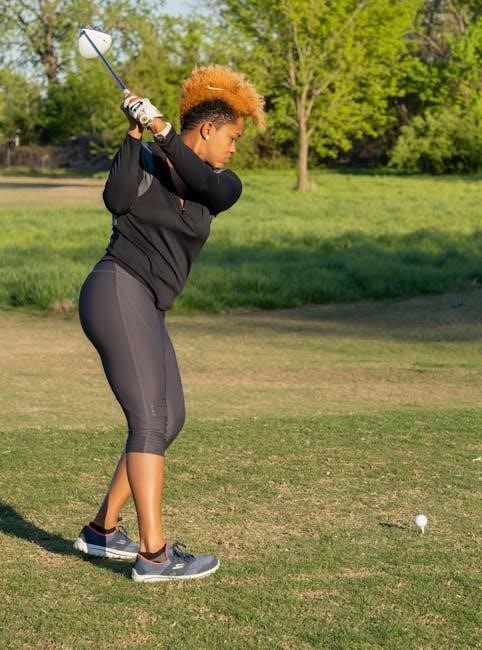
Golfers elbow, or medial epicondylitis, frequently impacts individuals due to repetitive motions, causing pain and inflammation within the elbow and forearm muscles.
This condition arises from overuse or consistent strain, often seen in golfers, but also prevalent in other activities involving gripping and wrist flexion.
Understanding the root causes and recognizing early symptoms are crucial steps toward effective management and preventing long-term discomfort and functional limitations.
What is Golfer’s Elbow? (Medial Epicondylitis)
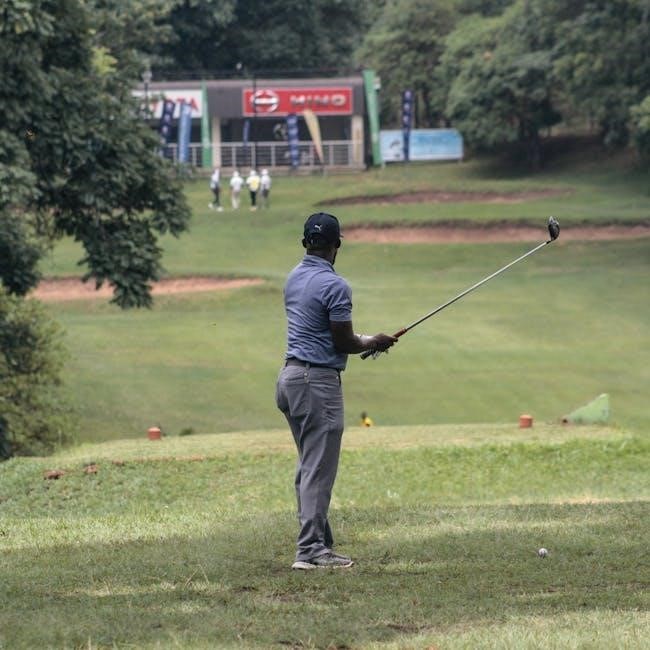
Golfer’s elbow, medically termed medial epicondylitis, is a condition characterized by inflammation of the tendons that attach to the medial epicondyle – the bony bump on the inside of your elbow. This isn’t exclusive to golfers; anyone performing repetitive wrist flexion and forearm pronation is susceptible.
The pain typically manifests on the inner elbow, radiating down the forearm. It’s a soft tissue injury stemming from overuse, leading to microscopic tears in the tendons. Activities involving forceful gripping, repetitive motions, or sustained wrist flexion exacerbate the condition.
Unlike tennis elbow (lateral epicondylitis), which affects the outer elbow, golfer’s elbow focuses on the inner side. Symptoms include tenderness, pain with movement, and potential weakness in the wrist and hand. Early recognition and appropriate management are vital to prevent chronic pain and functional limitations, often aided by targeted exercises.
Causes and Risk Factors
Golfer’s elbow primarily arises from repetitive stress and overuse of the forearm muscles, particularly those involved in wrist flexion and pronation. While named after golf, numerous activities contribute, including throwing, weightlifting, carpentry, and even prolonged computer use.
Several factors elevate risk. Poor technique in sports or work, inadequate warm-up, and improper equipment can strain the tendons. Increasing activity levels too quickly without allowing the body to adapt is also a significant contributor.
Individual factors like age (more common in adults 30-50), occupation, and pre-existing conditions can play a role. Weak forearm muscles and insufficient flexibility increase susceptibility. Addressing these risk factors through proper training, technique adjustments, and preventative exercises is crucial for minimizing the likelihood of developing medial epicondylitis.
Symptoms of Golfer’s Elbow
The hallmark symptom of golfer’s elbow is pain located on the inner side of the elbow, specifically over the medial epicondyle. This pain often radiates down the forearm, potentially affecting wrist and hand movements; Initially, discomfort may be mild and intermittent, worsening with activity.
Over time, the pain can become constant and more intense, even at rest. Individuals may experience tenderness to the touch in the affected area. Gripping objects, wrist flexion, and forearm pronation typically exacerbate the pain.
Weakness in the hand and wrist can develop, making everyday tasks challenging. In severe cases, numbness or tingling may occur. Early recognition of these symptoms is vital for prompt intervention and preventing the condition from becoming chronic.

Diagnosis of Golfer’s Elbow
Accurate diagnosis involves a thorough physical examination, detailed medical history review, and potentially, imaging to rule out other conditions causing similar elbow pain.
Physical Examination
A comprehensive physical examination is the cornerstone of diagnosing golfer’s elbow. The healthcare professional will begin by observing the affected elbow for any visible signs of swelling or inflammation. Palpation, or gentle feeling, around the medial epicondyle – the bony bump on the inside of your elbow – helps pinpoint tenderness.
Specific tests are then performed to assess pain provocation. These include resisted wrist flexion, where you attempt to bend your wrist against resistance, and resisted forearm pronation, turning your palm downwards against resistance. Pain elicited during these maneuvers strongly suggests medial epicondylitis.
The examiner will also evaluate your range of motion, checking for any limitations in extending or flexing your elbow. Neurological assessment, testing sensation and reflexes, is crucial to rule out nerve involvement. Finally, they’ll assess related areas like the shoulder and wrist to identify any contributing factors.
Medical History Review
A thorough medical history review is essential alongside the physical examination for accurate diagnosis. The healthcare provider will inquire about the onset of your elbow pain – was it sudden or gradual? They’ll ask about specific activities that aggravate the pain, such as golfing, weightlifting, or even everyday tasks like opening jars.
Details regarding the pain’s characteristics are vital: is it sharp, dull, or aching? Does it radiate down your forearm? Previous injuries to the elbow or wrist, as well as any underlying medical conditions like arthritis, will be noted.
The doctor will also ask about your occupation and hobbies to identify potential contributing factors. Finally, they’ll review your current medications and any prior treatments you’ve tried for the pain, providing a holistic understanding of your condition.
Ruling Out Other Conditions
Accurate diagnosis requires differentiating golfer’s elbow from other conditions presenting similar symptoms. Ulnar nerve entrapment, causing pain and numbness in the little finger and ring finger, must be excluded. Radial tunnel syndrome, affecting the back of the elbow, also needs consideration.
Osteoarthritis in the elbow joint can mimic golfer’s elbow pain, as can ligament injuries. Less common possibilities include referred pain from the neck or shoulder. Diagnostic tests, like nerve conduction studies or MRI scans, may be employed to rule out these alternatives.
A careful evaluation ensures the correct diagnosis, guiding appropriate treatment and preventing mismanaged care. This process is crucial for effective pain relief and restoring full function to the affected arm.

Golfer’s Elbow Exercises: A Comprehensive Guide
Targeted exercises are vital for recovery, encompassing warm-ups, strengthening, stretching, and proprioceptive drills to restore forearm function and alleviate discomfort effectively.
Warm-up Exercises
Prior to initiating strengthening or stretching routines, a thorough warm-up is essential to prepare the muscles and tendons for activity, minimizing the risk of further injury. Gentle movements increase blood flow and flexibility, optimizing exercise effectiveness.
Wrist flexor stretches involve extending the arm, palm up, and gently bending the wrist downwards with the other hand, holding for 15-30 seconds. Forearm rotations consist of slowly rotating the forearm clockwise and counterclockwise, enhancing mobility.
These initial exercises should be performed with controlled movements, avoiding any sharp pain. A proper warm-up not only prepares the physical body but also mentally focuses the individual on the rehabilitation process, fostering a positive mindset for recovery and long-term wellness.
Wrist Flexor Stretches
Wrist flexor stretches are foundational for golfer’s elbow rehabilitation, targeting the muscles on the inner forearm responsible for wrist flexion. To perform, extend the affected arm straight out in front of you, palm facing upwards. Gently bend your wrist downwards, pointing your fingers towards the floor.
With your other hand, apply a gentle overpressure to increase the stretch, holding the position for approximately 15 to 30 seconds. You should feel a mild stretch along the inner forearm, but avoid any sharp or intense pain. Repeat this stretch 2-3 times.
Consistency is key; regular performance of wrist flexor stretches improves flexibility and reduces tension in the affected muscles, promoting healing and restoring optimal function.
Forearm Rotations
Forearm rotations are a simple yet effective exercise to improve range of motion and reduce stiffness in the forearm, crucial for golfer’s elbow recovery. Begin by sitting comfortably with your forearm resting on a table, palm facing down.
Slowly rotate your forearm upwards, turning your palm to face up, and then slowly rotate it back down to the starting position. Focus on controlled movements, avoiding any jerky or rushed motions.
Repeat this rotation 10-15 times. You can also perform this exercise with a light weight (like a small dumbbell) to increase the challenge as your strength improves. Proper form and gradual progression are essential to prevent further irritation.
Strengthening Exercises
Strengthening exercises are vital for rehabilitating golfer’s elbow, focusing on rebuilding the forearm muscles weakened by inflammation. These exercises should be introduced gradually, starting with lighter resistance and increasing as strength improves.
Key exercises include wrist curls (palms up) and reverse wrist curls (palms down) to target both flexor and extensor muscles. Pronation/supination exercises, involving rotating the forearm with a light weight, also enhance muscle strength.
Don’t forget grip strengthening, using a stress ball or hand gripper. Remember to prioritize proper form over lifting heavy weights, and stop if you experience any pain. Consistency is key for optimal recovery.
Wrist Curls (Palms Up)
Wrist curls (palms up) are a foundational exercise for strengthening the wrist flexors, crucial muscles affected by golfer’s elbow. To perform this exercise, sit with your forearm resting on a flat surface, palm facing upwards, and a light weight (1-5 lbs) in your hand.
Slowly curl your wrist upwards, lifting the weight as high as comfortably possible, then slowly lower it back down. Focus on controlled movements, avoiding any jerking or momentum.
Begin with 3 sets of 10-15 repetitions, gradually increasing the weight as your strength improves. Proper form is paramount; maintain a stable forearm position throughout the exercise to isolate the wrist flexors effectively.
Reverse Wrist Curls (Palms Down)
Reverse wrist curls target the wrist extensors, balancing the muscles strengthened by traditional wrist curls and contributing to overall forearm health. Begin by sitting with your forearm supported on a flat surface, palm facing downwards, holding a light dumbbell (1-5 lbs).
Slowly lower your wrist, allowing the weight to descend, then curl it back up to the starting position. Maintain a controlled motion throughout the exercise, avoiding any sudden movements or momentum.
Perform 3 sets of 10-15 repetitions, gradually increasing the weight as your strength improves. This exercise is vital for restoring muscle balance and preventing re-injury, complementing the flexor-focused exercises.
Pronation/Supination Exercises
Pronation and supination exercises focus on rotating the forearm, strengthening the muscles responsible for these movements and improving grip strength. Sit comfortably with your elbow bent at 90 degrees and your forearm supported.
Hold a light weight (or no weight initially) in your hand. Slowly rotate your palm upwards (supination) and then downwards (pronation), maintaining control throughout the motion.
Focus on a full range of motion without any jerky movements. Perform 3 sets of 10-15 repetitions in each direction. These exercises are crucial for restoring forearm function and addressing muscle imbalances often associated with golfer’s elbow, enhancing overall arm stability.
Grip Strengthening Exercises
Grip strengthening exercises are vital for golfers elbow recovery, as a strong grip supports forearm muscles and reduces strain on the affected tendons. Begin with a simple hand squeeze, repeatedly opening and closing your hand, focusing on a firm but comfortable grip.
Progress to using a stress ball or grip strengthener, squeezing and holding for several seconds before releasing; Another effective exercise involves holding a small weight (like a dumbbell) and performing wrist curls, focusing on controlled movements.
Aim for 3 sets of 10-15 repetitions for each exercise, gradually increasing resistance as your strength improves. These exercises enhance forearm stability and contribute to preventing re-injury.
Stretching Exercises
Stretching exercises are paramount in a golfer’s elbow rehabilitation program, enhancing flexibility and reducing muscle tension. The Flexor-Pronator Stretch involves extending your arm straight, palm up, and gently bending your wrist down with your other hand, holding for 15-30 seconds.

Equally important is the Extensor Stretch, performed by extending your arm, palm down, and bending your wrist down, again holding for the same duration. These stretches should be performed slowly and deliberately, avoiding any sharp pain.
Remember to repeat each stretch several times throughout the day, especially before and after activities. Consistent stretching improves range of motion and supports the healing process, preventing stiffness and promoting optimal forearm function.
Flexor-Pronator Stretch
The Flexor-Pronator Stretch is a cornerstone of golfer’s elbow recovery, targeting the muscles responsible for wrist flexion and forearm pronation. Begin by fully extending your affected arm straight out in front of you, with your palm facing upwards. Gently bend your wrist downwards, pointing your fingers towards the floor.
Using your opposite hand, apply a gentle overpressure to increase the stretch, but avoid forcing it beyond a comfortable range. You should feel a stretch along the inner forearm. Hold this position for 15 to 30 seconds, breathing deeply throughout.
Repeat this stretch 2-3 times, several times a day, to improve flexibility and reduce muscle tightness. Proper form is crucial; avoid any sharp or radiating pain.
Extensor Stretch (for balance)
While focusing on flexor stretches is vital for golfer’s elbow, incorporating Extensor Stretches maintains muscle balance and prevents compensatory issues. Extend your affected arm straight out in front of you, with your palm facing downwards. Gently bend your wrist downwards, pointing your fingers towards the floor.
Using your opposite hand, gently pull your fingers towards your body, increasing the stretch along the outer forearm. You should feel a stretch along the back of your forearm and hand. Hold this stretch for 15-30 seconds, focusing on deep, controlled breathing.
Repeat 2-3 times, several times daily. This counter-stretch helps prevent imbalances that can exacerbate golfer’s elbow symptoms and promotes overall forearm health.
Proprioceptive Exercises
Proprioception, or your body’s awareness of its position in space, is crucial for recovery and preventing re-injury. These exercises enhance neuromuscular control around the elbow joint. Towel Squeeze involves placing a rolled-up towel under your elbow and squeezing it tightly for several seconds, repeating 10-15 times.
Theraband Exercises utilize resistance bands to improve strength and coordination. Perform wrist extensions and flexions with the band, focusing on controlled movements. Begin with light resistance and gradually increase it as your strength improves.
These exercises retrain the muscles to work together efficiently, improving stability and reducing the risk of future episodes of golfer’s elbow. Consistent practice is key to restoring optimal function.
Towel Squeeze
Towel Squeeze is a simple yet effective proprioceptive exercise designed to enhance grip strength and forearm muscle activation. To perform this exercise, sit comfortably with your forearm resting on a table, palm facing up. Place a small, rolled-up towel under your elbow.
Slowly squeeze the towel as tightly as possible, holding the contraction for 5-10 seconds. Focus on engaging the muscles of your forearm and hand. Repeat this squeezing motion 10-15 times, ensuring controlled movements throughout.
This exercise helps improve neuromuscular control and reinforces proper muscle activation patterns, aiding in the rehabilitation of golfer’s elbow and preventing future occurrences. It’s a gentle way to rebuild strength and stability.
Theraband Exercises
Theraband exercises utilize elastic resistance bands to strengthen forearm muscles crucial for golfer’s elbow recovery. Anchor the band securely, and begin with wrist flexion – keeping your elbow straight, pull your hand upwards against the band’s resistance, then slowly return. Repeat 10-15 times.
Next, perform wrist extension, securing the band under your foot. Extend your wrist upwards against the resistance, holding briefly before controlled release. Again, aim for 10-15 repetitions. Pronation and supination exercises, with the band positioned appropriately, further enhance forearm strength.
These exercises progressively challenge the muscles, promoting healing and restoring functional capacity. Remember to maintain proper form and gradually increase resistance as strength improves.

PDF Resources for Golfer’s Elbow Exercises
Numerous PDF guides offer structured exercise plans for golfer’s elbow, detailing stretches and strengthening routines for effective rehabilitation and pain management.
Finding Reliable PDF Guides
Locating trustworthy PDF resources for golfer’s elbow exercises requires careful consideration. Prioritize sources from reputable medical institutions, physiotherapy clinics, or certified athletic trainers. University websites and established healthcare organizations often provide evidence-based exercise programs in downloadable PDF format.
Be cautious of generic guides lacking author credentials or clear disclaimers. Look for PDFs that specify the qualifications of the professionals who developed the content. A reliable guide will detail each exercise with clear instructions, illustrations, and modifications for different fitness levels.
Cross-reference information from multiple sources to ensure consistency and accuracy. Checking for dates of publication is also important, as medical guidelines evolve over time. Always consult with your physician or physical therapist before starting any new exercise program, even if it’s based on a seemingly credible PDF guide.
What to Look for in a PDF Exercise Plan
A comprehensive PDF exercise plan for golfer’s elbow should incorporate a phased approach, beginning with gentle warm-up stretches and progressing to strengthening and proprioceptive exercises. Look for a plan that includes wrist flexor stretches, forearm rotations, and wrist curls – both palms up and down – to address muscle imbalances.
Essential components also include pronation/supination exercises and grip strengthening activities. The plan should emphasize proper form and technique to prevent further injury. A good PDF will detail the number of repetitions, sets, and frequency for each exercise, alongside clear cautions.
Furthermore, it should include guidance on pain management and modifications for individuals at different stages of recovery. A well-structured plan will also highlight the importance of consistent adherence and gradual progression.
Preventing Golfer’s Elbow
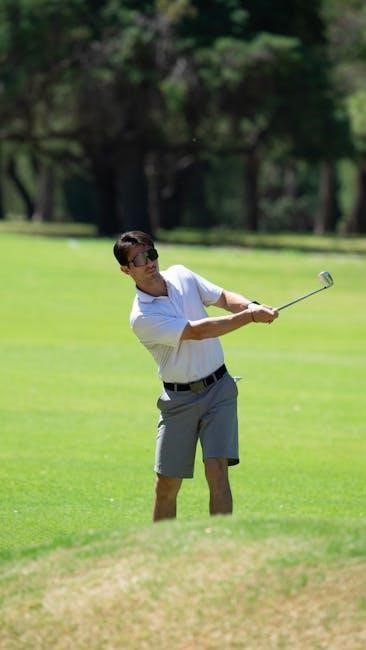
Proactive prevention involves utilizing proper technique, considering equipment adjustments, and consistently performing stretching and strengthening exercises to maintain forearm functionality.
Proper Technique in Golf & Other Activities
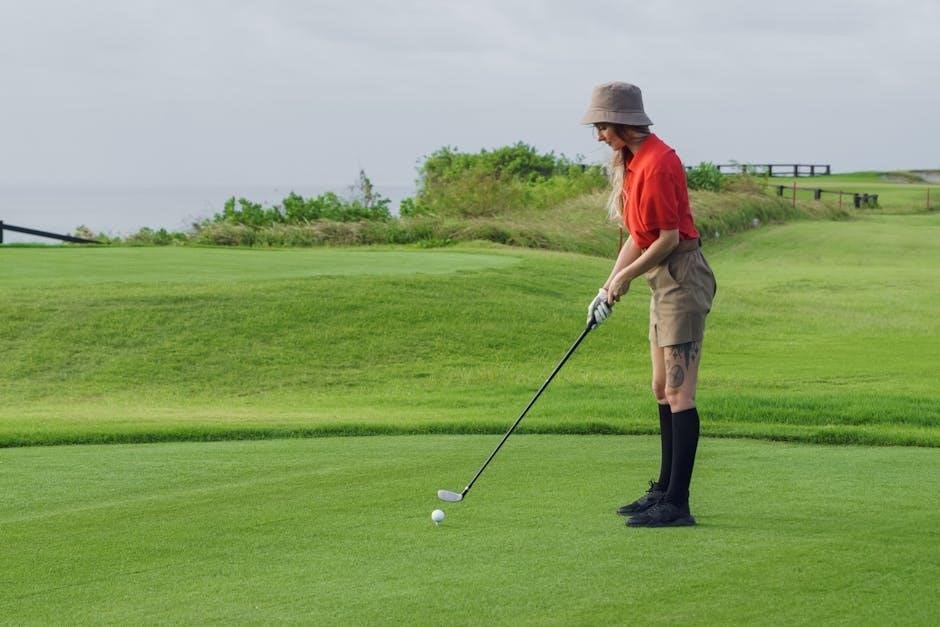
Maintaining correct form during golf swings and repetitive activities is paramount in preventing Golfer’s Elbow. Improper mechanics place undue stress on the forearm muscles and tendons, leading to inflammation and pain. Focus on a smooth, controlled swing, avoiding forceful or jerky movements.
In activities beyond golf – such as weightlifting, hammering, or even prolonged computer use – ensure proper posture and ergonomic setups. Avoid excessive wrist flexion or pronation during tasks. Break up repetitive motions with frequent, short breaks to allow muscles to recover;
Consider professional instruction to refine your technique in sports or work-related activities. A qualified coach or therapist can identify and correct biomechanical flaws that contribute to strain. Prioritizing technique minimizes the risk of overuse injuries like Golfer’s Elbow, promoting long-term joint health and performance.
Equipment Considerations
Selecting appropriate equipment can significantly impact the risk of developing Golfer’s Elbow. In golf, ensuring proper club fitting is crucial; grips that are too small or too large can strain the forearm muscles. Club weight and shaft flexibility should also align with your swing speed and strength.
For other activities, consider ergonomic tools and equipment. Using tools with cushioned grips can reduce stress on the hands and forearms. Adjusting workstation setups – chair height, keyboard position, and monitor placement – promotes neutral wrist and elbow alignment.
Investing in quality equipment designed to minimize strain and maximize comfort is a proactive step towards injury prevention. Regularly inspect equipment for wear and tear, replacing items as needed to maintain optimal support and functionality.
Importance of Regular Stretching & Strengthening
Consistent stretching and strengthening exercises are paramount in both preventing and managing Golfer’s Elbow. Regular stretching improves flexibility in the forearm muscles, reducing tension and promoting a greater range of motion. Strengthening exercises build endurance and resilience, enabling the muscles to withstand repetitive stress.
A balanced program should incorporate both wrist flexor and extensor exercises, alongside forearm pronation and supination drills. Prioritizing proper form over weight or resistance is crucial to avoid exacerbating the condition.
Integrating these exercises into a daily or near-daily routine establishes a foundation for long-term elbow health, minimizing the risk of recurrence and optimizing performance in various activities.