
Iliotibial (IT) band syndrome causes pain, especially during running or cycling; effective exercises and stretches can manage and resolve this common athletic condition.
What is the Iliotibial (IT) Band?
The iliotibial (IT) band is a thick band of fibrous tissue that runs along the outside of your thigh, extending from the hip to just below the knee. It’s not a muscle itself, but rather a strong reinforcement of the thigh muscles that plays a crucial role in stabilizing the knee and hip during movement.
Essentially, it helps control the motion of the leg and provides leverage for powerful movements like running and cycling. While naturally quite strong, the IT band can become irritated and inflamed when subjected to repetitive stress, leading to IT band syndrome. Understanding its function is key to comprehending why specific exercises are beneficial for prevention and treatment, focusing on surrounding muscle support.
Causes of IT Band Syndrome
IT band syndrome typically arises from repetitive friction between the IT band and the bony prominence on the outer knee (lateral femoral epicondyle); This friction isn’t usually due to the IT band being too tight, but rather from imbalances in surrounding muscles – particularly weak glutes, tight quads, and poor biomechanics.
Overuse, rapid increases in training intensity, inadequate warm-up, and improper running form all contribute to the development of the syndrome. Running on uneven surfaces or with worn-out shoes can also exacerbate the issue. Addressing these underlying factors, through targeted exercises and biomechanical adjustments, is crucial for effective management and prevention, rather than solely focusing on stretching the IT band itself.
Common Symptoms of IT Band Syndrome
The hallmark symptom of IT band syndrome is pain on the outer side of the knee, often described as a burning or stinging sensation. This pain typically begins during activity, such as running or cycling, and may subside with rest initially. However, as the condition progresses, pain can occur even at rest, and may radiate up the thigh.
Individuals often report tenderness to the touch along the IT band, particularly just above the knee. Clicking or snapping sensations may also be present. Pain can worsen when going down stairs, or during prolonged periods of standing. Early recognition of these symptoms is vital for prompt intervention and preventing the condition from becoming chronic, hindering athletic performance and daily activities.
Diagnosis and Assessment
Accurate diagnosis involves a physical exam and ruling out other conditions; Google Scholar aids research into effective assessment techniques for IT band syndrome.
Physical Examination Techniques
A comprehensive physical examination is crucial for diagnosing IT band syndrome. Healthcare professionals often employ several tests to pinpoint the source of lateral knee pain. The Ober’s test assesses IT band tightness; a therapist passively moves the leg from a neutral position into adduction and extension.
A positive test indicates a tight IT band. The Noble compression test involves applying pressure over the lateral femoral epicondyle while the knee is flexed and extended, reproducing pain. Palpation along the IT band can reveal tenderness. Observing the patient’s gait and range of motion also provides valuable diagnostic clues.
These techniques, combined with a detailed patient history, help differentiate IT band syndrome from other potential causes of knee pain, ensuring appropriate treatment planning.
Ruling Out Other Conditions
Accurate diagnosis requires differentiating IT band syndrome from conditions mimicking its symptoms. Meniscal tears, patellofemoral pain syndrome, and lateral collateral ligament (LCL) injuries can present with similar lateral knee pain. A thorough evaluation is essential.
Healthcare providers utilize specific tests to rule out these possibilities. McMurray’s test assesses meniscal integrity, while patellar tracking assessments evaluate patellofemoral function. LCL stress tests check ligament stability.
Imaging, such as X-rays, may be used to exclude structural issues. Considering the patient’s history, mechanism of injury, and response to initial treatment aids in accurate diagnosis. Ruling out other conditions ensures targeted and effective management of IT band syndrome.
The Role of Google Scholar in Researching IT Band Syndrome
Google Scholar serves as an invaluable resource for evidence-based information on IT band syndrome. It provides access to a vast database of scholarly articles, theses, and books, enabling healthcare professionals and individuals to stay current with the latest research.
Researchers can utilize Google Scholar to identify studies evaluating the effectiveness of various IT band exercises, stretching techniques, and preventative measures; Citation tracking features reveal influential publications and emerging trends in the field.
The platform’s search capabilities allow for targeted queries, refining results to focus on specific aspects of IT band syndrome management. Google Scholar empowers informed decision-making regarding treatment and rehabilitation protocols.

IT Band Exercises: A Comprehensive Plan
A structured exercise plan, incorporating warm-ups, strengthening, stretching, and foam rolling, is crucial for managing and preventing iliotibial band syndrome effectively.
Warm-up Exercises
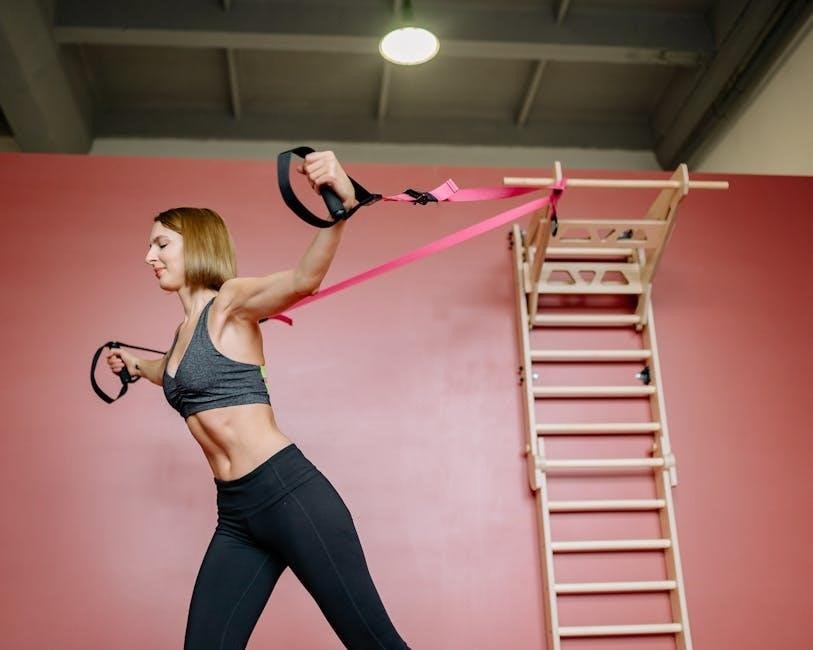
Prior to engaging in more strenuous IT band exercises, a proper warm-up is essential to prepare the muscles and tissues. This increases blood flow and flexibility, reducing the risk of injury. Begin with five to ten minutes of light cardio, such as jogging in place or jumping jacks, to elevate your heart rate. Following cardio, incorporate dynamic stretches specifically targeting the lower body.
These dynamic movements should mimic the actions of your activity, preparing the IT band and surrounding muscles for the demands ahead. Examples include leg swings (forward, backward, and sideways), torso twists, and high knees. Focus on controlled movements through a full range of motion. A well-executed warm-up significantly enhances the effectiveness of subsequent strengthening and stretching exercises.
Dynamic Stretching for IT Band Activation
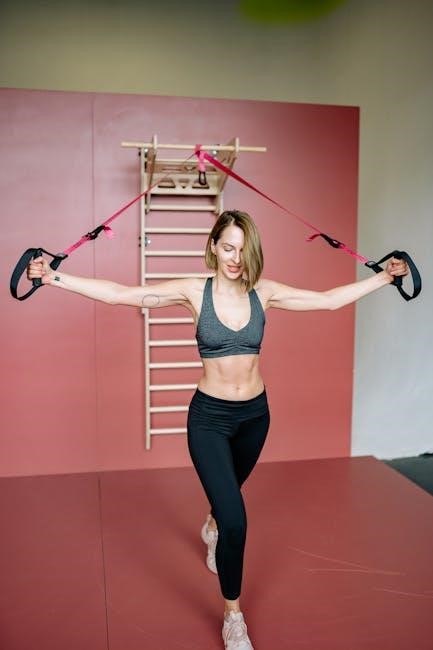
Dynamic stretches are crucial for preparing the iliotibial (IT) band and surrounding musculature for activity. Unlike static stretches, these involve controlled movements through a full range of motion. Begin with lateral leg swings, gently swinging each leg side to side, focusing on hip mobility. Next, perform walking lunges with a torso twist towards the leading leg, engaging the core and improving rotational flexibility;
Include standing quad stretches, pulling the heel towards the glutes while maintaining balance. Also, incorporate hip circles, rotating the hips in both directions to loosen the hip joint. Perform each stretch for 10-15 repetitions per leg. These dynamic movements increase blood flow, improve flexibility, and activate the muscles needed for optimal performance and injury prevention during exercise.
Strengthening Exercises
Strengthening the muscles surrounding the IT band is paramount for addressing imbalances and preventing future issues. A comprehensive plan should target the gluteus maximus, hip abductors, and core. Weakness in these areas often contributes to IT band syndrome. Prioritize exercises that build strength and endurance, not just peak force.
Focus on functional movements that mimic the demands of your activity. Incorporate exercises like glute bridges, clamshells, and side leg raises to strengthen the glutes and hip abductors. Planks and Russian twists will enhance core stability, crucial for maintaining proper form and preventing compensatory movements. Aim for 3 sets of 12-15 repetitions for each exercise, gradually increasing resistance as you get stronger.
Gluteus Maximus Strengthening
A strong gluteus maximus is vital for pelvic stability and proper lower limb alignment, directly impacting IT band function. Weak glutes often lead to increased stress on the IT band. Exercises should focus on activating and strengthening this key muscle group.
Effective exercises include glute bridges – performed by lying on your back with knees bent and lifting your hips off the ground, squeezing the glutes at the top. Single-leg glute bridges increase the challenge. Hip thrusts, using a bench for support, provide a greater range of motion and resistance. Squats and lunges, performed with proper form, also engage the gluteus maximus. Aim for 3 sets of 10-12 repetitions, focusing on controlled movements and full gluteal contraction.
Hip Abductor Strengthening
Strengthening the hip abductors – gluteus medius and minimus – is crucial for controlling pelvic drop during single-leg stance, a common issue contributing to IT band syndrome. Weak hip abductors allow the pelvis to dip, increasing stress on the IT band.
Effective exercises include side-lying leg raises, focusing on lifting the leg while keeping the hips stable. Clamshells, performed with a resistance band around the knees, further isolate the hip abductors. Standing hip abduction with a resistance band also provides targeted strengthening. Lateral walks with a resistance band, maintaining a slight squat position, are highly effective. Perform 3 sets of 15-20 repetitions for each exercise, concentrating on slow, controlled movements and avoiding compensatory motions.
Core Strengthening for Stability
A strong core provides a stable base for movement, reducing stress on the lower extremities and, consequently, the IT band. Core weakness can lead to altered biomechanics and increased strain during activities like running and cycling.
Effective exercises include planks, holding the position for 30-60 seconds, focusing on maintaining a straight line from head to heels. Side planks target the obliques, crucial for pelvic stability. Bird-dogs improve core stability and coordination. Dead bugs challenge core control while minimizing lower back strain. Bicycle crunches engage multiple core muscles. Perform 3 sets of 10-15 repetitions for each exercise, prioritizing proper form over speed. A stable core enhances overall movement efficiency and helps prevent IT band issues.
Stretching Exercises
Stretching plays a vital role in addressing IT band syndrome by improving flexibility and reducing tension in surrounding muscles. While directly stretching the IT band itself is difficult, focusing on the quadriceps, hamstrings, and hip flexors yields significant benefits.
Quadriceps stretches, like standing quad stretches or lying quad stretches, alleviate tension in the front of the thigh. Hamstring stretches, such as towel stretches or seated hamstring stretches, improve flexibility in the back of the thigh. Hip flexor stretches, like the kneeling hip flexor stretch, address tightness that can contribute to IT band issues. Hold each stretch for 30 seconds, repeating 2-3 times. Consistent stretching, combined with strengthening exercises, promotes optimal biomechanics and reduces pain.
IT Band Static Stretching
Directly stretching the IT band statically is challenging due to its dense, fibrous nature. However, modified stretches can target surrounding tissues to indirectly influence IT band flexibility. A common technique involves lying on your back with the affected leg crossed over the opposite leg.
Gently pull the bent knee towards your chest, feeling a stretch along the outside of the hip and thigh. Another variation involves standing and reaching across your body with one arm to gently pull the thigh inward. Hold each stretch for 30 seconds, repeating 2-3 times. Remember, the goal isn’t to force a stretch in the IT band itself, but to release tension in the surrounding musculature, promoting improved movement patterns and reduced discomfort.
Quadriceps Stretching
Tight quadriceps muscles can contribute to IT band syndrome, increasing tension along the entire kinetic chain. A standard quadriceps stretch involves standing and holding your foot behind you, gently pulling your heel towards your glutes. Maintain a neutral spine and avoid arching your back. Feel the stretch along the front of your thigh.
Hold the stretch for 30 seconds, repeating 2-3 times on each leg. Another effective stretch is performed lying on your side, grabbing your top foot and pulling it towards your glutes. Focus on keeping your knees aligned and avoiding any twisting motions. Regularly stretching the quadriceps helps improve flexibility and reduce the strain on the IT band, supporting overall lower limb health and function;
Hamstring Stretching
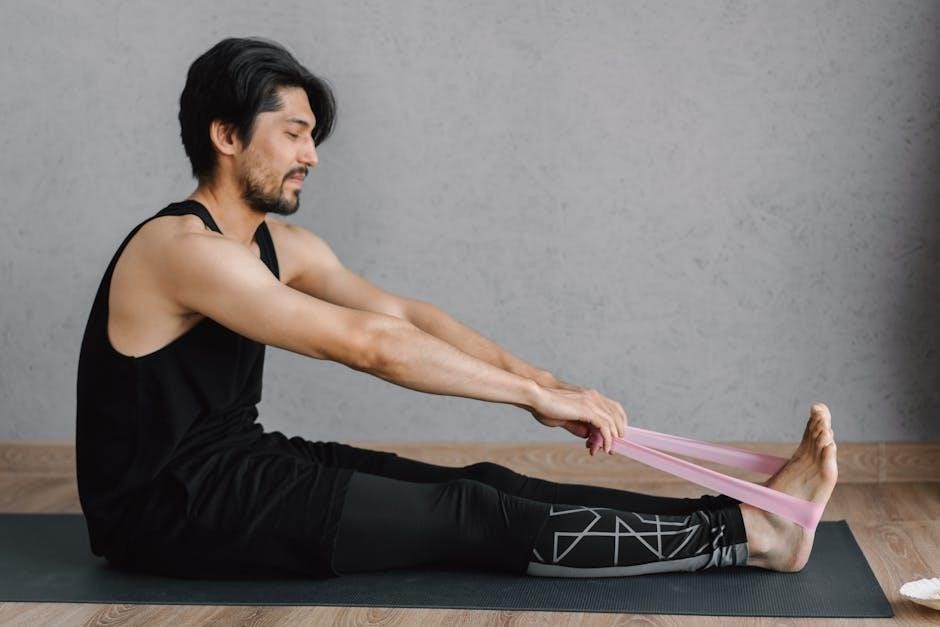
Tight hamstrings can also influence IT band tension, contributing to imbalances in the lower leg. A common hamstring stretch is the seated toe-touch, where you sit with legs extended and reach towards your toes. Keep your back as straight as possible to avoid rounding, focusing on feeling the stretch in the back of your thighs.
Alternatively, perform a lying hamstring stretch by looping a towel or strap around your foot and gently pulling your leg towards you. Maintain a slight bend in your knee to prevent overstretching. Hold each stretch for 30 seconds, repeating 2-3 times per leg. Improving hamstring flexibility helps restore proper biomechanics and reduces compensatory strain on the IT band, aiding in recovery and prevention.
Foam Rolling Techniques
Foam rolling is a self-myofascial release technique that can help alleviate IT band tightness and improve flexibility. Begin by positioning yourself with the foam roller under your outer thigh, supporting your weight with your hands. Slowly roll from just above the knee to the hip, pausing on any tender spots for 20-30 seconds.
This should not be intensely painful; a moderate discomfort is expected. Additionally, foam roll your quadriceps and hamstrings, as tightness in these muscle groups can contribute to IT band issues. Perform each rolling sequence for 1-2 minutes, focusing on controlled movements. Consistent foam rolling can help break up adhesions and restore optimal muscle function, supporting IT band health.
Foam Rolling the IT Band
To effectively foam roll the IT band, lie on your side with the foam roller positioned under your lower thigh. Support your upper body with your forearm and ensure your top leg is bent for stability. Slowly roll from just above the knee to the upper thigh, maintaining a controlled pace. Focus on areas that feel particularly tight or tender.
Spend 30-60 seconds on each leg, pausing on sensitive spots to allow the muscle to release. Remember, discomfort is normal, but sharp pain should be avoided. Proper form is crucial; keep your core engaged and avoid twisting your body. Consistent IT band foam rolling can improve flexibility and reduce discomfort, aiding in recovery and prevention.
Foam Rolling the Quadriceps
Begin by lying prone (on your stomach) with the foam roller positioned under your upper thigh, just above the knees. Support your weight on your forearms and ensure your core is engaged to maintain a straight line from head to heels. Slowly roll from just above the knees to the hip flexors, pausing on any tender spots.
Spend approximately 30-60 seconds per leg, focusing on areas of tightness. Remember to breathe deeply and maintain a controlled pace. Foam rolling the quads helps release tension that can contribute to IT band issues. Avoid rolling directly over the kneecap. Consistent rolling improves muscle flexibility and can alleviate discomfort, supporting overall leg health and performance.
Foam Rolling the Hamstrings
Start by sitting with your legs extended and the foam roller positioned under your hamstrings. Support your weight with your hands behind you, fingers pointing towards your hips. Slowly roll from just above the knees to your glutes, pausing on any particularly tender areas. This targets the muscle group often tight in individuals experiencing IT band syndrome.
Spend 30-60 seconds per leg, maintaining a controlled pace and breathing deeply. Foam rolling the hamstrings helps improve flexibility and reduce tension, which can indirectly alleviate IT band stress. Avoid rolling directly over the back of the knee. Consistent application can enhance muscle recovery and contribute to better biomechanics, supporting injury prevention and overall leg health.
Preventative Measures & Long-Term Management
Consistent exercise, proper form, and gradual training increases are crucial for preventing IT band syndrome and maintaining long-term joint health.
Proper Running Form and Biomechanics
Optimizing running form is paramount in preventing IT band syndrome. Cadence, or steps per minute, plays a significant role; a higher cadence generally reduces stress on the IT band. Avoid overstriding, where the foot lands far in front of the body, as this increases impact and strain.
Focus on a midfoot strike rather than heel striking, promoting better shock absorption. Maintaining a slight bend in the knees and engaging the core muscles contribute to stability and efficient movement. Consider a gait analysis performed by a professional to identify biomechanical imbalances. Addressing these imbalances through targeted exercises and form adjustments can significantly reduce the risk of developing IT band issues.
Appropriate Footwear
Selecting the right running shoes is crucial for IT band health. Shoes should provide adequate cushioning and support, tailored to your foot type and running style. Overpronation, where the foot rolls inward excessively, can contribute to IT band issues; stability shoes can help correct this.
Conversely, those with high arches may benefit from neutral shoes with ample cushioning. Regularly replacing worn-out shoes is essential, as cushioning degrades over time, increasing impact forces. Consider getting professionally fitted at a running store to ensure a proper match. Avoid drastic changes in footwear, as this can disrupt biomechanics and potentially trigger IT band pain.
Gradual Increase in Training Intensity
A sudden jump in mileage or intensity is a major risk factor for IT band syndrome. The body needs time to adapt to increased stress; a gradual progression minimizes this risk. Follow the 10% rule: don’t increase weekly mileage by more than 10%. Incorporate rest days into your training schedule to allow for recovery and tissue repair.
Listen to your body and don’t push through pain. Cross-training activities, like swimming or cycling, can maintain fitness without overloading the IT band. Vary your workouts to avoid repetitive stress. Prioritize proper warm-up and cool-down routines before and after each session, preparing muscles for activity and aiding recovery.
Resources and Further Information
Google Scholar offers extensive research, while consulting a physical therapist provides personalized guidance for effective IT band syndrome management and exercise plans.
Utilizing Google Scholar for Latest Research
Google Scholar is an invaluable tool for staying current with the latest findings regarding iliotibial (IT) band syndrome and effective exercise interventions. It provides a broad search across scholarly literature, including journal articles, theses, and books, offering insights into evolving treatment approaches.
Researchers and clinicians utilize Google Scholar to identify peer-reviewed studies examining the efficacy of specific IT band exercises, stretching techniques, and preventative measures. You can track citation metrics to gauge the impact of research and discover emerging trends in the field.
By searching keywords like “IT band syndrome exercises,” “iliotibial band rehabilitation,” or “IT band stretching protocols,” you can access a wealth of information to inform your understanding and treatment strategies. Remember to critically evaluate the sources and consider the study designs when interpreting the results.
Consulting with a Physical Therapist
A physical therapist (PT) plays a crucial role in the accurate diagnosis and personalized treatment of iliotibial (IT) band syndrome. While numerous resources detail IT band exercises, a PT can assess your specific biomechanics, identify contributing factors, and create a tailored exercise program;
They will evaluate your running form, muscle imbalances, and flexibility to determine the root cause of your IT band pain. A PT can then guide you through appropriate strengthening, stretching, and foam rolling techniques, ensuring proper form to maximize effectiveness and prevent further injury.
Furthermore, a PT can progress your exercises safely and monitor your response to treatment, adjusting the program as needed. Don’t hesitate to seek professional guidance for optimal recovery and long-term management of IT band syndrome.